Why TV Promos and People-Driven Commercials Require a Different Kind of DP in 2026
There’s a funny thing that happens when people look at a Director of Photography’s portfolio.
If they see a lot of:
tabletop commercial production
high-speed work
…they sometimes assume that’s all the DP does.
Like the second a bottle enters the frame, suddenly the cinematographer is legally not allowed to work with humans anymore.
Which, obviously, is nonsense.
Because while product cinematography and tabletop cinematography demand an insane amount of precision, people-driven commercial cinematography and TV promo work require a totally different set of muscles.
And in 2026, those skills still matter a lot.
Maybe more than ever.
Because while brands are pushing harder into:
performance content
product ads
e-commerce video
short-form social
modular campaign assets
…there is still huge value in content where:
a real person needs to feel believable
a spokesperson needs to feel trustworthy
a host needs to feel engaging
a celebrity needs to feel elevated
a founder needs to feel authentic
or a TV promo needs to instantly create energy, confidence, and clarity
That kind of work doesn’t just need a good camera.
It needs a Director of Photography in Los Angeles who understands people.
And that’s a very different job than making a bottle look expensive.

Shooting Products and Shooting People Are Not the Same Sport
Let’s start with the obvious.
A product:
doesn’t get nervous
doesn’t blink
doesn’t ask if this is their “good side”
doesn’t suddenly change the blocking because they “feel weird over there”
and usually doesn’t need a pep talk unless the label is crooked
People are different.
In people-driven commercial cinematography, the frame is not just about:
lighting
composition
movement
texture
brand design
It’s also about:
comfort
trust
performance
energy
body language
pacing
eye line
personality
and how natural someone feels on camera
That’s a huge difference.
In TV promos, broadcast campaigns, commercial video production, and brand storytelling with people, the cinematographer isn’t just shaping the image.
They’re helping shape the environment.
Because if the talent feels stiff, over-directed, under-supported, or self-conscious…
The audience feels it immediately.
That’s why this category requires a different kind of DP.
In 2026, Authenticity Matters More Than “Cinematic” for People-Led Content
This is a major shift in commercial video production right now.
For years, a lot of branded content chased “cinematic” as the main goal.
And sure — cinematic still matters.
But when you’re shooting:
TV promos
broadcast spots
brand interviews
founder-led content
testimonial-style campaigns
commercials with talent
lifestyle brand films
people-focused advertising video production in Los Angeles
…the bigger priority is often:
Does this person feel believable?
That’s the real question.
Because a beautiful frame means nothing if the person in it feels:
stiff
overlit
disconnected
over-rehearsed
awkward
too polished
too “commercial” in the wrong way
or like they were clearly told to “just be natural” by someone who has never met a human
In 2026, audiences are more sensitive than ever to performance that feels fake.
Which means the best people-focused commercial cinematography often lives in a balance between:
polish
warmth
clarity
trust
and natural presence
That’s not accidental.
That takes experience.
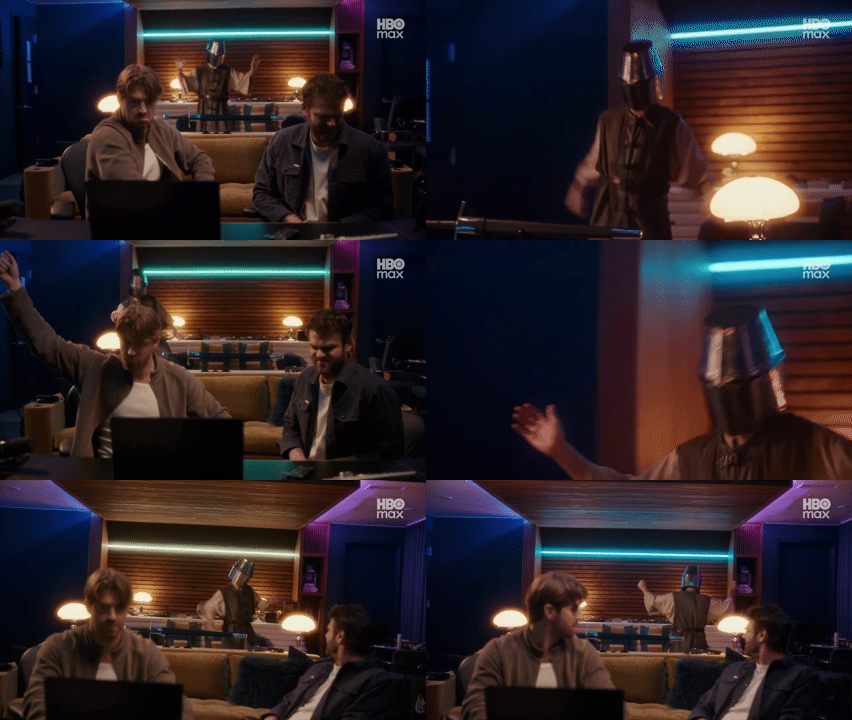
TV Promos Still Need Strong Visual Identity — Fast
TV promos are their own beast.
They often need to do a lot, very quickly:
introduce a personality
build energy
support a network or show identity
create excitement
feel polished
fit brand standards
work in short runtimes
and often deliver multiple versions or modular assets
That means a Director of Photography in Los Angeles shooting TV promos has to think differently than on a product or tabletop set.
The job becomes:
how fast can we establish tone?
how quickly can the talent feel confident?
how can the lighting feel elevated without slowing the day down?
how can camera movement support personality, not overpower it?
how can we build energy that still feels controlled?
In TV promo cinematography, the image needs to feel:
immediate
confident
polished
high-value
personality-driven
and brand-appropriate
That’s a very specific skill set.
It’s not just “make it cinematic.”
It’s “make it clear, exciting, and instantly watchable.”
People-Driven Commercials Are Really About Trust
This is one of the most important truths in commercial cinematography.
When a campaign involves people — especially real people, founders, professionals, spokespersons, or trust-based brands — the visual goal is often not just beauty.
It’s trust.
That means the Director of Photography has to think about:
whether the lighting feels flattering but honest
whether the environment feels credible
whether the camera distance supports connection
whether movement helps intimacy or hurts it
whether contrast feels premium or intimidating
whether the frame supports clarity
whether the person feels like themselves
This is especially true in:
finance commercials
health and wellness brand content
hospitality campaigns
corporate brand videos
TV promos with hosts or talent
people-first advertising video production
testimonial-driven commercial content
brand trust campaigns in Los Angeles
If the audience doesn’t trust the person on screen, the campaign loses power.
Sometimes it’s the one that makes the person feel:
real
capable
warm
aspirational
confident
approachable
That’s harder than it sounds.
Lighting People Is About Psychology as Much as Technique
A lot of DPs can technically light a face.
That’s not the same as lighting a person well for the purpose of the campaign.
In people-driven commercial cinematography, lighting has to support:
the subject’s confidence
the brand’s tone
the emotional goal of the piece
the environment
the pace of production
and often, the person’s own comfort on set
For example:
A high-energy TV promo might need:
brighter separation
cleaner punch
crisp shape
dynamic movement support
a more elevated “broadcast confidence” feel
A trust-based brand commercial might need:
softer, more natural shaping
gentle contrast
subtle warmth
a believable environment
intimacy without over-stylization
A luxury people-led brand film might need:
sculpted contrast
elegant shadow
slower movement
more texture
higher production polish
but still believable human presence
That’s why lighting people in commercial production is not one-size-fits-all.
The image needs to support the emotional read of the person.
That’s a big part of the craft.
The Best DPs Help Talent Feel Comfortable Without Making It Weird
This is one of those things that sounds simple until you’re on set.
In commercial video production, especially in Los Angeles, talent can range from:
trained actors
hosts
celebrities
athletes
founders
executives
real customers
first-time on-camera people
or someone from the client team who was “totally comfortable” until the lens appeared
That can mean:
keeping setups efficient so energy doesn’t die
avoiding overly technical chaos around talent
choosing angles that help confidence
keeping movement purposeful and not distracting
adjusting lighting without making the subject feel “worked on”
understanding when to simplify
protecting momentum
and reading the room
Some people need:
space
Some need:reassurance
Some need:less crew energy near them
Some need:a frame that feels less intimidating
That kind of sensitivity matters.
Because in people-driven commercial cinematography, performance and comfort are tied together.
And when the subject relaxes, the camera immediately gets better material.
Camera Movement With People Has to Feel Motivated
This is a big difference from product cinematography.
With products, movement can be:
structural
graphic
precise
designed around shape, packaging, or motion control
With people, movement has to feel more emotionally motivated.
That means the camera movement in:
TV promos
brand films
lifestyle commercials
people-focused ad campaigns
celebrity spots
corporate storytelling content
…needs to support:
energy
connection
confidence
pacing
tone
personality
and emotional rhythm
If the movement is too flashy, it can feel performative.
If it’s too static, it can feel lifeless.
If it’s too aggressive, it can pull attention away from the person.
The best commercial DPs in Los Angeles know when to:
move with purpose
stay out of the way
build energy subtly
let the performance carry the moment
or use the camera to enhance personality without announcing itself
That’s a real skill.
People-Led Commercial Work Is a Huge Part of a Well-Rounded Commercial DP’s Value
This is strategically important for Drew.
Because yes — his authority in:
product cinematography
beverage cinematography
food cinematography
motion control
tabletop commercial production
high-speed cinematography
…is a huge strength.
But if the positioning stops there, some people may incorrectly assume he’s only in that lane.
That’s why content like this matters.
It reinforces that Drew also brings strong value in:
TV promo cinematography
broadcast-style brand content
celebrity or talent-based campaigns
trust-based advertising
commercial storytelling with people
brand videos that need personality, not just polish
That balance is powerful.
Because agencies and producers love a Director of Photography in Los Angeles who can handle:
precision product work
andstrong people work
That makes him more versatile without making him feel vague.
Big difference.
Final Thoughts
In 2026, TV promos and people-driven commercials still require a very different kind of Director of Photography.
Yes, the image matters.
But in these categories, the job goes beyond:
lighting
lensing
movement
composition
It becomes about:
trust
comfort
performance
pace
personality
clarity
and making the audience believe the person on screen
That’s what strong people-focused commercial cinematography in Los Angeles is really about.
Because when you’re shooting a bottle, the product doesn’t care how it feels.
When you’re shooting a person?
That’s half the job.
And the best commercial cinematographers in Los Angeles know how to do both.