
The Evolving Role of the Director of Photography in 2026
Motion control may be one of the most visible shifts in commercial cinematography—but it’s only part of a much larger evolution. In 2026, the role of the Director of Photography has expanded well beyond lighting and camera movement. Today’s DP is expected to think strategically, collaboratively, and systemically across the entire production lifecycle.
This blog looks past any single technology to examine how the DP’s role has fundamentally changed, what clients and agencies now expect, and why the most successful cinematographers are those who understand the full ecosystem their images live inside.
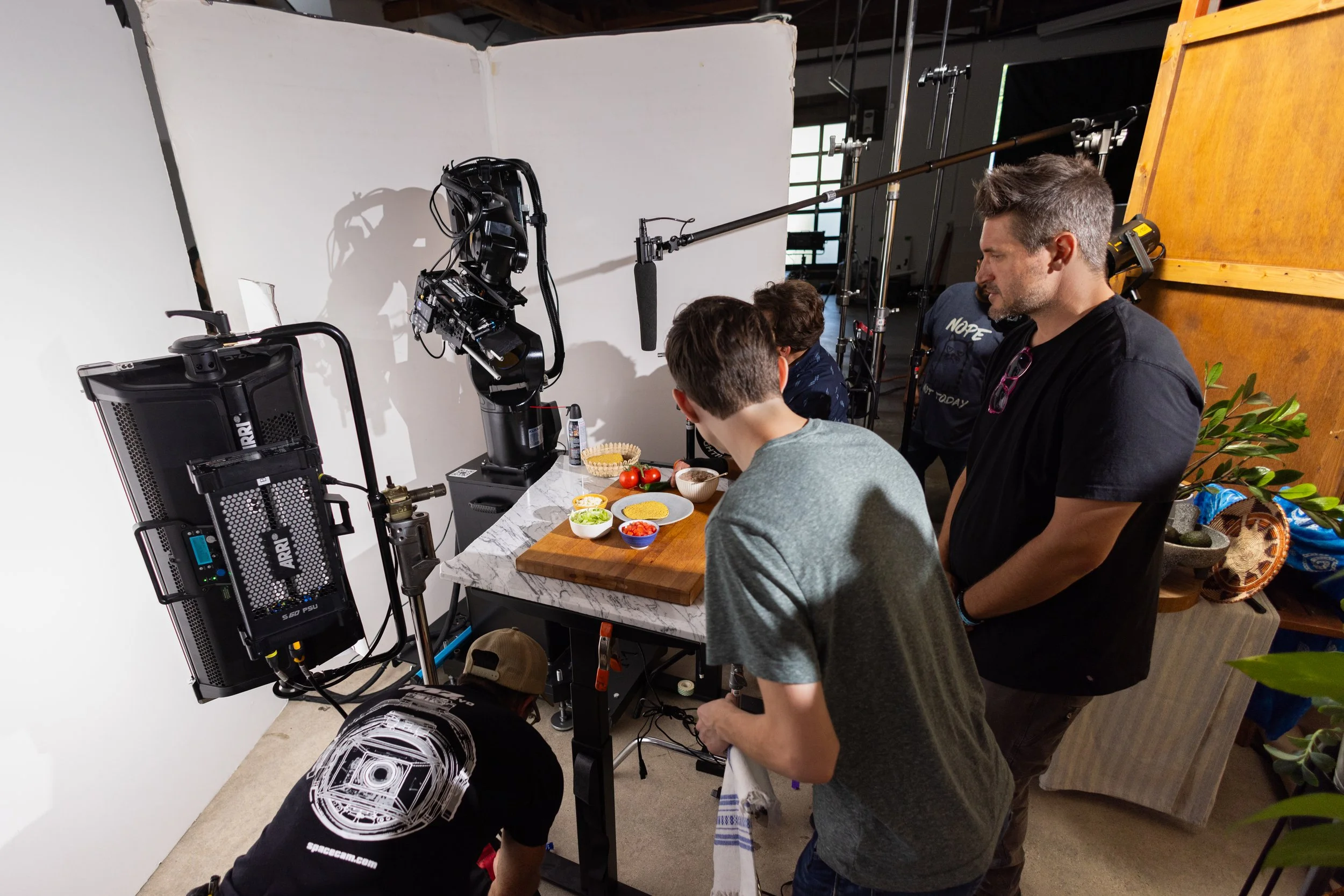
The DP Is Now Involved Earlier—and Stays Involved Longer
In the past, many DPs were brought in once the creative direction was mostly locked. In 2026, that timeline has shifted.
Modern DPs are increasingly involved:
During concept development
In previsualization and shot planning
In discussions around deliverables and formats
During post-production reviewsWhen a DP understands the end use of the footage early, decisions on set become smarter, faster, and more intentional.
This expanded involvement isn’t about ego—it’s about efficiency.
When a DP understands the end use of the footage early, decisions on set become smarter, faster, and more intentional.

Cinematography Is No Longer Isolated From Strategy
Cinematography used to be judged in isolation: exposure, composition, movement.
Now it’s judged by how well it:
Supports brand positioning
Aligns with marketing objectives
Scales across channels
Maintains consistency over time
That means the DP must understand:
Where the content will live
How it will be consumed
What success looks like beyond the frame (See Case Studies)
This strategic awareness has become part of the DP’s value—not an optional extra
Pre-Production Has Become a Creative Battleground
In 2026, the most important cinematography decisions often happen before the shoot.
Pre-production now includes:
Shot system design (using Pre-Viz tools like MP Studio help a ton!)
Camera language planning
Format and crop considerations
Post-production requirements
DPs who excel here reduce friction later.
Instead of solving problems live on set, they arrive with:
Clear visual logic
Defined priorities
Built-in flexibility
That preparation protects both creativity and schedule.
The DP as a Cross-Department Collaborator
The modern DP doesn’t operate in a silo.
They collaborate closely with:
Directors
Production designers
Robotics and camera teams
VFX and post supervisors
Agency creatives
This collaboration is less about delegation and more about alignment.
Post-Production Awareness Is Now Mandatory
One of the biggest shifts in the DP role is post-production literacy.
In 2026, DPs are expected to understand:
How footage will be edited
What compositing requires
How color workflows impact lighting decisions
Where clean plates and alternates matter
This doesn’t mean doing post—it means designing for it.
Shots that ignore post needs often cost more later, even if they looked good on set.
Clients Expect DPs to Be Problem-Solvers
Technical excellence is assumed. What sets DPs apart now is decision-making under pressure.
Clients value DPs who:
Anticipate issues before they arise
Offer solutions, not just opinions
Balance ambition with feasibility
Keep productions moving forward
In high-stakes commercial environments, calm clarity is often more valuable than flashy technique.
Technology Is Expanding—But It’s Not the Point
2026 offers more tools than ever:
Motion control
High-speed capture
Virtual production
Advanced LED lighting
But clients don’t hire DPs for tools. They hire them for judgment.
The evolving role of the DP is knowing:
When technology adds value
When it adds noise
When restraint serves the idea better
Taste has become as important as technical skill
Consistency Has Become a Creative Metric
As brands build long-term visual identities, consistency matters more than novelty.
DPs are now responsible for:
Maintaining visual continuity across campaigns
Protecting brand tone and pacing
Reusing camera language intelligently
This requires thinking in systems, not one-off shots.
Consistency doesn’t limit creativity—it builds trust with audiences.

The DP as a Long-Term Creative Partner
In 2026, the most successful DPs aren’t just hired for individual shoots. They’re brought back because they:
Understand the brand
Understand the client’s pressures
Deliver predictably high results
This shift positions the DP as a creative partner, not a vendor.
In competitive production hubs like Los Angeles, that distinction matters.
Soft Skills Matter More Than Ever
As productions grow more complex, communication has become a core DP skill.
Strong DPs:
Explain decisions clearly
Translate creative ideas into technical plans
Listen as much as they lead
Adapt without losing intent
The ability to align people is now as critical as aligning lights.
What the Modern DP Balances Every Day
The role of the DP in 2026 sits at the intersection of:
Creativity
Technology
Strategy
Collaboration
Balancing those elements requires:
Preparation
Flexibility
Confidence
Taste
This is what defines modern cinematography—not just the image itself.
Final Thoughts
The Director of Photography in 2026 is no longer defined by a single skill set or tool.
They are:
Strategic thinkers
Visual designers
Technical leaders
Collaborative partners
Motion control may have accelerated this evolution—but the shift goes much deeper.
And the DPs who thrive are the ones who understand that the frame is only the beginning.