Music Video DP Work in a Commercial-First Industry
Music videos have always been a creative proving ground. They’re where visual risks are taken, styles are tested, and cinematographers stretch beyond traditional commercial rules. But in 2026, music video DP work exists inside a commercial-first industry—and that has reshaped what these projects demand.
Today’s music videos don’t live in isolation. They’re part of broader brand ecosystems, artist marketing strategies, and multi-platform campaigns. For directors of photography, that means balancing expressive freedom with strategic intent.
This blog explores how music video cinematography has evolved, what artists and labels now expect, and how DPs can thrive creatively while operating inside commercial realities.
Music Videos Are No Longer “Just Music Videos”
In 2026, a music video often functions as:
A brand statement for the artist
A launch asset for an album or tour
A source of social clips and stills
A visual extension of merch and identity
That means the DP isn’t just serving the song—they’re serving a larger visual strategy.
Lighting, camera movement, and texture choices must hold up across:
Full-length videos
Vertical cuts
Thumbnails and key frames
Promotional stills
Cinematography now has to perform beyond the timeline of the edit.
Creative Freedom Still Exists—But It’s More Intentional
Music videos still allow for bold choices:
Stylized lighting
Aggressive camera movement
Experimental lenses
Non-traditional color palettes
What’s changed is why those choices are made.
In a commercial-first landscape, visuals need to:
Align with the artist’s brand
Be repeatable across releases
Feel intentional, not random
The strongest music video cinematography today feels expressive—but designed, not chaotic.
Performance Is the Priority—and the Risk
Unlike product or tabletop work, music videos are performance-driven.
That introduces variables:
Energy fluctuations
Movement unpredictability
Emotional timing
For the DP, the challenge is creating visual systems that support performance without constraining it.
This often means:
Flexible lighting setups
Camera movement that enhances, not distracts
Coverage strategies that protect the edit
Control and freedom must coexist.
Commercial Techniques Are Influencing Music Video Craft
Many tools once associated with commercials are now standard in music video production:
Motion control for repeatable moves
Previsualization for complex setups
Shot lists designed for social outputs
Lighting built for consistency across takes
These techniques don’t dilute creativity—they allow DPs to push visuals further safely.
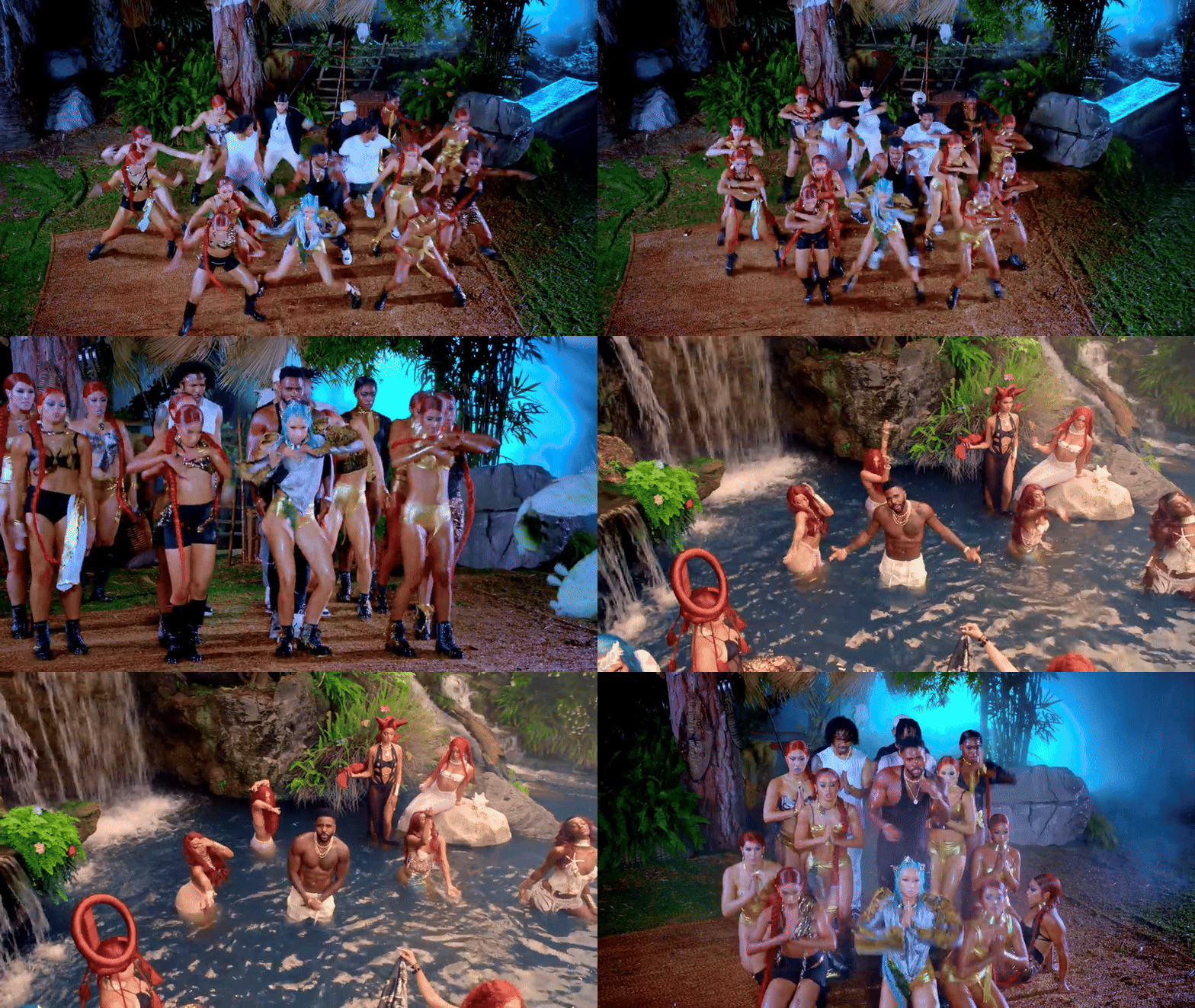
The result: music videos that feel cinematic, polished, and scalable like this one I did for Jason Derulo - Acapulco recently

Music Video DP Work as a Career Signal
In 2026, music video work plays a unique role in a DP’s career.
It demonstrates:
Visual voice
Risk tolerance
Ability to work fast
Comfort with performance
For agencies and brands, strong music video cinematography often signals:
Creative confidence
Adaptability
Style with discipline
That’s why music video experience still opens doors—especially when it translates cleanly into commercial workflows.
The Balance Between Style and Longevity
One of the biggest traps in music video cinematography is chasing trend over substance.
In a commercial-first industry, DPs must ask:
Will this age well?
Does this serve the artist long-term?
Can this visual language evolve?
Cinematography that’s too tied to a moment risks becoming disposable.
The most effective music video visuals feel distinctive and durable.
Budget Constraints Breed Smarter Cinematography
Music videos rarely have the budgets they once did—but expectations haven’t dropped.
This forces DPs to:
Design efficient lighting
Maximize locations
Reuse setups creatively
Make bold choices with limited resources
In many ways, this constraint sharpens craft.
The discipline developed here directly benefits commercial cinematography.
Collaboration Is Everything on Music Video Sets
Music video sets are often fast, intimate, and creatively charged.
The DP must collaborate closely with:
The director
The artist
Production designers
Stylists and choreographers
Clear communication is essential—especially when decisions impact brand image.
DPs who can translate emotion into visual structure thrive in this environment.
Music Videos as Visual R&D
For many cinematographers, music videos remain the best place to:
Test new lighting approaches
Explore unconventional movement
Develop signature looks
The key difference in 2026 is intentional experimentation.
DPs who treat music videos as controlled creative labs—rather than chaos zones—build work that travels.
Why This Matters in Commercial Hubs
In production centers like Los Angeles, the line between music videos and commercials is thinner than ever.
Artists are brands.
Brands want culture.
And cinematographers sit at that intersection.
Music video DP work that understands commercial expectations becomes a powerful calling card.
Final Thoughts
Music videos in 2026 still thrive on emotion, energy, and expression—but they exist inside a commercial-first reality.
For directors of photography, success means:
Protecting creative voice
Understanding strategic context
Designing visuals that scale
Serving performance without sacrificing craft
The best music video cinematography today doesn’t fight the commercial world.
It borrows its discipline—and uses it to push creativity further.