How to Market Yourself as a Director of Photography in 2026
If you’re a Director of Photography in Los Angeles right now, you’ve probably felt the weird pressure of 2026.
You know you need to stay visible.
You know you need to keep your work in front of people.
You know the industry is tighter, budgets are smaller, and there are more talented cinematographers in Los Angeles chasing the same jobs.
But at the same time…
Nobody wants to become that person.
You know the type:
posting every day like their mortgage depends on it (it probably does)
writing captions that sound like a startup founder who just discovered LUTs
cold messaging half of LA like they’re selling solar panels
acting like one decent tabletop shot means they’ve “redefined visual storytelling”
There’s a fine line between being visible and looking desperate.
And in commercial cinematography, people can feel that difference immediately.
The good news?
Marketing yourself as a DP in Los Angeles in 2026 does matter.
The better news?
You do not need to become a content machine or a self-help influencer to do it well.
You just need to be clear, consistent, and useful.
That’s what actually works.

First: Marketing Yourself as a DP Is Not the Same as “Posting More”
This is the first mindset shift a lot of cinematographers need to make.
Marketing yourself does not mean:
posting random stills every day
uploading every BTS clip you’ve ever shot
spamming producers with “just checking in” messages
writing generic “grateful for this amazing team” captions forever
That’s activity.
Not strategy.
In 2026, strong director of photography marketing is really about one thing:
Making it easier for the right people to understand why they should hire you.
That’s it.
For a commercial DP in Los Angeles, that means your marketing should answer:
What kind of work are you strongest in?
What kinds of jobs do you make easier?
What categories do you understand better than most?
What do agencies, directors, and producers trust you with?
If your online presence doesn’t answer those questions, you’re making people work too hard.
And in Los Angeles commercial production, people do not enjoy homework.
Your Website Still Matters More Than People Want to Admit
A lot of DPs love to obsess over Instagram and ignore their website like it’s a tax form.
That’s a mistake.
Your website is still the most important owned asset you have as a Director of Photography in Los Angeles.
Why?
Because when someone is actually considering you for a job in:
commercial video production
advertising video production
tabletop cinematography
branded content
…they’re usually going to your site.
And what they see needs to be obvious within seconds.
A strong DP website in 2026 should make these things instantly clear:
You are a Director of Photography / cinematographer
You work in Los Angeles / California
You specialize in specific categories
You’ve done real commercial work
You understand production, not just pretty images
It’s easy to contact you
Not:
one mysterious reel
six unlabeled thumbnails
a homepage that says “capturing emotion through light”
and a contact form hidden like it’s a side quest
Clean beats clever.
In 2026, Niche Authority Beats Broad Talent
This is one of the biggest lessons for cinematographers in Los Angeles right now.
If you market yourself like you shoot “everything,” people assume you’re not especially known for anything.
That’s a problem.
Because the DPs getting consistent work in California commercial cinematography are usually known for lanes like:
food cinematography Los Angeles
beverage cinematography
product cinematography
tabletop commercial video production
beauty and skincare product cinematography
commercial cinematography for brands
motion control cinematography
high-speed product work
people-driven commercial video production
drone cinematography for branded content
That doesn’t mean you can’t do more than one thing.
It means your marketing should make your strongest categories obvious.
If someone lands on Drew’s site or LinkedIn, they should immediately understand:
This is a commercial DP in Los Angeles who really knows product, food, beverage, tabletop, motion control, branded content, and precision-driven commercial production.
That’s strong positioning.
That’s marketable.
LinkedIn Is Quietly Becoming More Important for Commercial DPs
If you’re still treating LinkedIn like it’s only for corporate recruiters and awkward headshots, 2026 would like a word.
For a Director of Photography in Los Angeles, LinkedIn is becoming increasingly useful because:
agency creatives are there
producers are there
executive producers are there
brand-side marketing teams are there
commercial directors are there
people who actually hire for advertising video production are there
And unlike Instagram, people on LinkedIn are more open to:
process
perspective
industry insight
behind-the-scenes thinking
case study style posts
leadership / problem-solving content
That’s a huge advantage for someone like Drew.
Especially because his experience naturally supports content about:
what agencies want from a commercial DP
how food and beverage cinematography actually works
why motion control matters
what makes product cinematography feel premium
why relationships matter more than algorithms
how experienced DPs survive in a tighter market
That kind of content positions him as:
experienced
grounded
trusted
commercially relevant
Not just visually talented.
That matters.
Instagram Still Matters — But Context Matters More
Instagram is still important. Of course it is.
It’s visual.
It’s immediate.
It’s where a lot of people first discover a cinematographer.
But the biggest mistake a lot of DPs make is posting beautiful work with zero context.
A bottle shot with no explanation is nice.
A bottle shot with context like:
what the challenge was
why the reflections mattered
how motion control helped
why beverage cinematography is so demanding
how the shot supports the brand
…is much stronger.
That’s the difference between:
“Nice frame.”
and
“Oh, this person really knows what they’re doing.”
In 2026, the strongest DP marketing uses Instagram for:
visual proof
BTS credibility
quick expertise
repeat category reinforcement
Not just aesthetics.
Case Studies Are One of the Best Marketing Tools You’re Probably Underusing
This is a big one.
If you’re a commercial cinematographer in Los Angeles, case studies are one of the best ways to market yourself without sounding salesy.
Why?
Because they let you talk about:
real work
real challenges
real solutions
real production value
And they naturally position you as someone who understands more than just camera settings.
Case studies work especially well for Drew because his portfolio includes strong examples across:
food cinematography
beverage cinematography
product cinematography
motion control commercial production
drone cinematography
automotive work
TV promo / branded content
people-focused commercial shoots
A good case study says:
here’s what the client needed
here’s what made it challenging
here’s how I approached it as a Director of Photography
here’s why the shot worked
That’s incredibly persuasive to agencies and producers.
Much more than another reel drop.
Don’t Cold Pitch Like You’re Begging for Work
Let’s talk about outreach.
Yes, you should absolutely build relationships.
Yes, you should stay on people’s radar.
But no — you should not message random producers like:
“Hey! Love your work! Let me know if you ever need a DP!”
That’s not outreach.
That’s digital confetti.
Good outreach in 2026 looks more like:
thoughtful, selective connection-building
referencing real work or real overlap
sharing useful insight, not asking for favors
being visible consistently before the ask ever happens
staying familiar without becoming a nuisance
The best commercial DPs in Los Angeles usually don’t “pitch” constantly.
Then when the right job comes up, they’re already in the conversation.
That’s a much stronger long game.
Behind-the-Scenes Content Works Best When It Shows Judgment
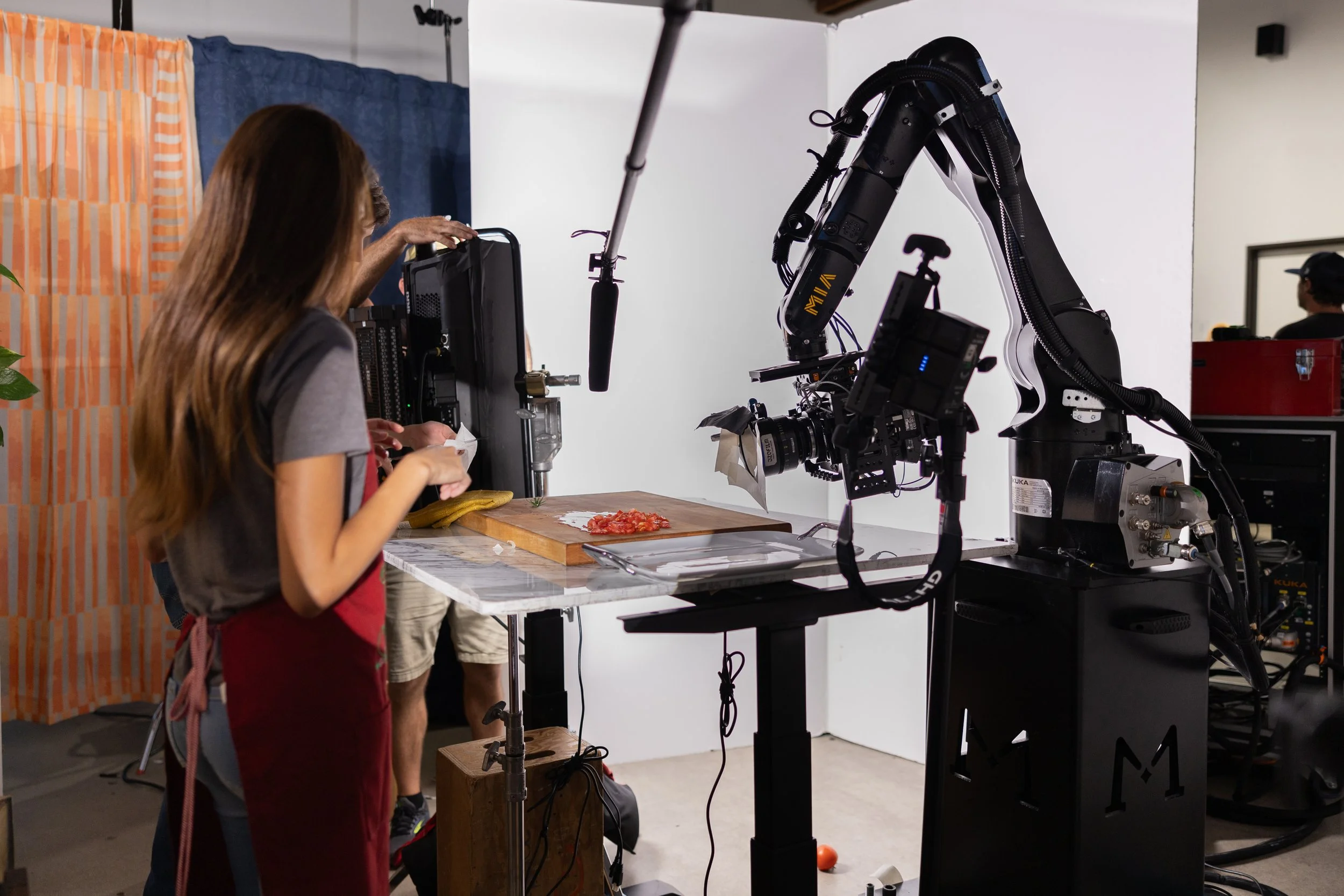
BTS content is powerful — but only if it shows more than just “I was there.”
Anyone can post:
a monitor shot
a robot clip
a lens cart
a gimbal setup
a lighting rig
That’s fine.
But the stronger version is:
why the setup mattered
what the production challenge was
what decision made the shot work
what you had to adapt on set
what that says about your experience as a DP
That’s how BTS becomes marketing.
It stops being proof of attendance…
and starts becoming proof of competence
The Best DP Marketing Feels Like Calm Confidence
This is probably the biggest takeaway.
If your marketing feels frantic, it repels the exact people you want to attract.
Agencies, producers, and brands want DPs who feel:
calm
clear
capable
experienced
collaborative
easy to trust
So your online presence should feel the same way.
That means:
no forced “guru” energy
no over-explaining
no fake scarcity
no constant self-congratulation
no pretending every frame changed cinema forever
Just:
strong work
clear positioning
useful context
real-world insight
consistent presence
That’s what makes a Director of Photography in Los Angeles feel established.
Final Thoughts
Marketing yourself as a Director of Photography in 2026 absolutely matters.
But the goal isn’t to become louder.
It’s to become clearer.
For cinematographers in Los Angeles, the ones who are winning are usually the ones who:
know their niche
present their work cleanly
use case studies
show up consistently on LinkedIn and Instagram
build relationships instead of chasing attention
and make their experience easy to understand
That’s the real formula.
Not desperation.
Not noise.
Not constant posting for the sake of posting.
Just clear, useful, confident positioning.
That’s what makes people remember you.
And more importantly — that’s what makes them hire you.