How to Choose a Product Cinematographer in London or Essex for Beauty, Cosmetics & Commercial Advertising
There's a funny thing about product cinematography.
The smaller the product, the more complicated the shoot can become.
A tiny cosmetics bottle sitting on a tabletop might look like the simplest thing in the world to film. Until you realize the label needs to be perfectly readable, the glass is reflecting everything in the studio, the color needs to be accurate, and somebody has decided the bottle should rotate through a beautifully choreographed camera move.
Suddenly, that little bottle has an entire production department worrying about it.
I've spent years working as a commercial Director of Photography in Los Angeles, shooting beauty products, cosmetics, apparel, household products, paint, toys, and all sorts of consumer goods.
Now, as I bring my cinematography experience to London and Essex, product advertising is one of the areas I'm particularly excited to continue exploring.
If you're an agency producer, creative director, or brand looking for a product cinematographer in London, an Essex DOP, or a commercial Director of Photography for your next advertising campaign, here are a few things I'd consider before choosing the person behind the camera.
1. Not Every Commercial DOP Is a Product Cinematographer
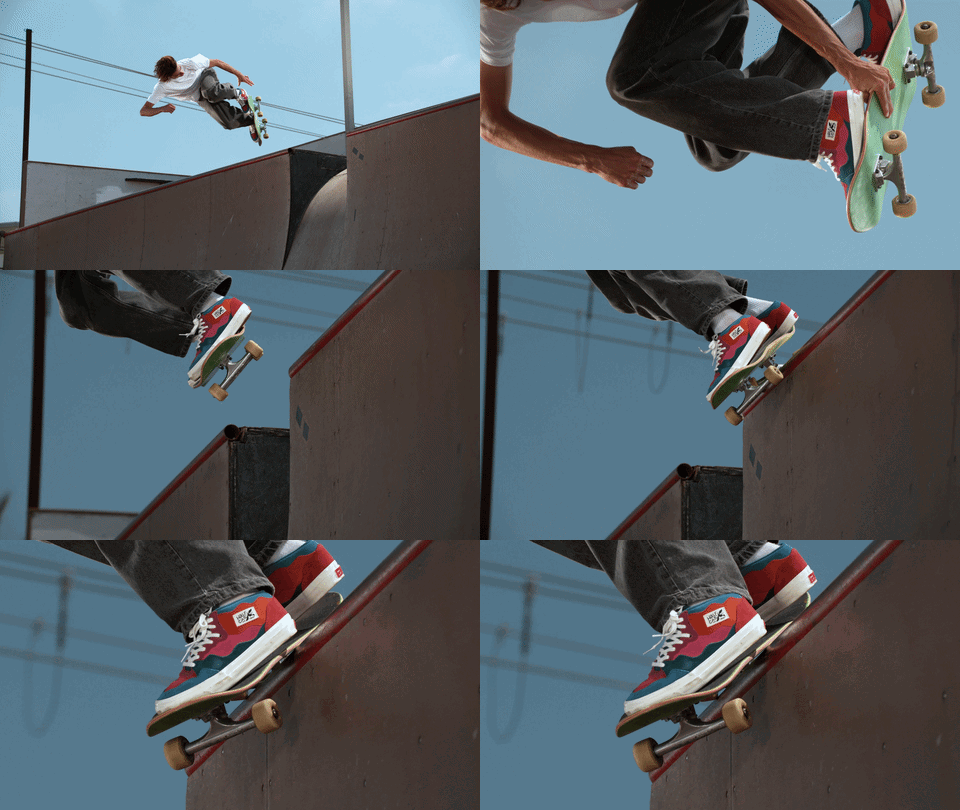
There's a difference between shooting a beautiful commercial and making a product look beautiful.
Both require good cinematography, but product advertising comes with its own challenges.
When you're photographing a person, there's movement, expression, performance, and emotion to work with.
When you're photographing a bottle of moisturizer, the bottle isn't giving you much.
It's just sitting there.
Waiting.
Judging your lighting decisions.
So you have to create the visual interest through composition, lighting, movement, texture, and the way the product interacts with its environment.
That's why relevant experience matters.
If you're searching for a Director of Photography in London or a commercial DOP in Essex, don't just look for an impressive showreel. Look at the actual product work.
Can they light reflective packaging?
Can they create beautiful textures?
Do they understand how different materials respond to light?
Can they make a relatively ordinary consumer product feel desirable?
Those are the things that separate a strong product cinematographer from somebody who simply owns a very good camera.
2. Beauty & Cosmetics Cinematography Is All About the Details
Beauty and cosmetics advertising is a particularly interesting part of product cinematography because the details are everything.
Think about the products themselves.
Glass serum bottles.
Glossy lipstick tubes.
Metallic caps.
Transparent skincare packaging.
Creams, lotions, powders, and liquids.
Each material reacts differently to lighting.
A light that looks fantastic on frosted glass might be completely wrong for polished chrome.
A reflective cap might suddenly reveal the entire studio.
And a tiny change in camera position can turn an elegant highlight into a distracting white blob.
As a beauty and product cinematographer, you're constantly making small adjustments to control how the audience sees the product.
The goal isn't necessarily to make everything look impossibly perfect.
It's to make the product feel like itself, just at its absolute best.
For beauty brands, that might mean soft, flattering light and a clean, premium visual style.
For cosmetics, it might involve bold colors, strong reflections, dramatic shadows, or close-up textures.
And for skincare products, you might want a fresh, natural aesthetic that feels approachable rather than overly polished.
When hiring a beauty cinematographer in London, I'd recommend looking for somebody whose work demonstrates an understanding of materials, textures, color, and brand personality.
Not just somebody who knows how to make a bottle spin.
Although a good bottle spin can be pretty satisfying.
3. Product Cinematography Should Reflect the Brand, Not Just the Product
One of the first things I want to understand when working on a commercial is what the brand is trying to communicate.
Because two products that look almost identical might need completely different cinematography.
A premium skincare brand might want something minimal, soft, and understated.
A bold cosmetics company might want saturated colors, dramatic lighting, and fast camera movement.
A luxury fragrance campaign might lean into reflections, shadows, and atmosphere.
A household product might need to feel clean, functional, and easy to use.
And a toy commercial should probably have some fun.
At least I hope so.
The point is that product cinematography isn't simply about showing what something looks like.
It's about giving that product a personality.
That influences everything from the lenses and lighting to the camera movement, set design, and pacing.
For agencies and creative directors looking for a commercial cinematographer in London or Essex, I'd suggest asking potential DOPs how they would interpret the creative treatment.
Not just whether they can execute it.
A good Director of Photography should be able to bring ideas to the conversation while still respecting the overall creative direction.
4. Lighting Products Is a Different Skill From Lighting People
One of the biggest technical differences between traditional commercial cinematography and tabletop product cinematography is the way we approach lighting.
When you're lighting a person, you're often thinking about skin tone, shape, expression, and how the light moves across a face.
With products, the material itself becomes the challenge.
Glass needs carefully controlled reflections.
Metal needs shape and contrast.
Plastic can look surprisingly cheap under the wrong lighting.
Fabric needs texture.
Paint needs accurate color.
And transparent packaging sometimes seems determined to disappear entirely.
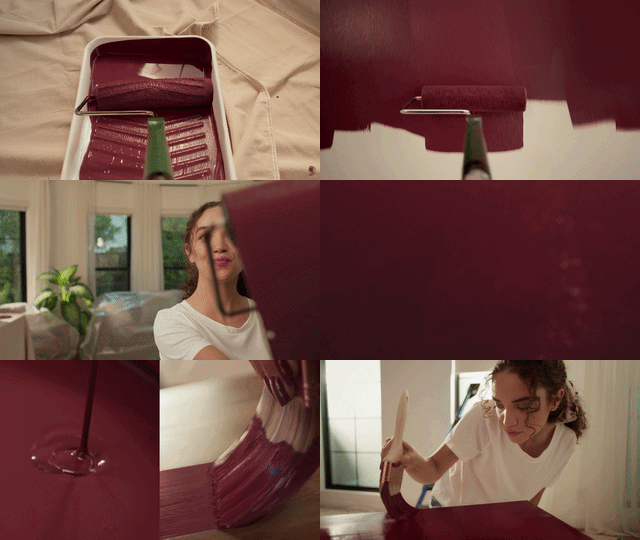
I've worked on campaigns involving beauty products, consumer goods, and paint, including work for Behr, where color accuracy is obviously pretty important.
You can't simply make a paint color look more exciting if it no longer resembles the actual product.
That's a conversation nobody wants to have with the client.
It's one of the reasons tabletop cinematography can take so much time.
A movement of just a few millimeters can completely change the reflection on a product.
From across the studio, it might look like nothing is happening.
I promise you, a lot is happening.
5. When Motion Control Makes Product Advertising Better
Motion control is one of my favorite tools for commercial and product cinematography.
I've spent years working with robotic camera systems, and they're particularly useful when a shot requires precise, repeatable movement.
Imagine a cosmetics bottle suspended in the air while the camera moves around it.
Or a product reveal where multiple elements need to appear at exactly the right moment.
Or a complex tabletop sequence involving several passes that will later be combined in post-production.
These are situations where motion control can make a huge difference.
Once a camera move is programmed, the robot can reproduce it with remarkable accuracy.
That gives the director, DOP, special effects team, and VFX artists much more control over the final result.
It also opens up creative possibilities that would be difficult to achieve consistently by hand.
But I always come back to the same principle.
Just because you can use a robot doesn't mean you should.
Sometimes a simple slider move or locked-off camera is exactly what the campaign needs.
For agencies searching for a motion control DOP in London or a tabletop cinematographer in Essex, the important thing is finding somebody who understands both the creative and technical sides of the process.
The robot should make the commercial better.
Not just make the behind-the-scenes footage look impressive.
6. High-Speed Cinematography Can Reveal a Completely Different Side of a Product
Another technique I love working with is high-speed cinematography.
Using cameras like the Phantom, we can capture moments that happen far too quickly for the human eye to appreciate.
A burst of powder.
A splash of liquid.
A product falling through water.
Fabric moving through the air.
A cosmetic texture spreading across a surface.
At high frame rates, those tiny moments become entire visual sequences.
And in product advertising, that can be incredibly effective.
High-speed cinematography lets us show texture, movement, and material behavior in ways that feel almost abstract.
It's particularly useful for beauty and cosmetics campaigns where the product itself might have an interesting physical quality.
Of course, high-speed shooting introduces its own challenges.
You need significantly more light.
Timing becomes critical.
Special effects need to be repeatable.
And you need to understand how the product will behave once the action starts.
That's why experience with high-speed product cinematography matters.
The final shot might last three seconds.
Getting those three seconds right can take considerably longer.
7. A Good Product DOP Should Be Thinking About the Entire Campaign
One thing I always encourage agencies and production companies to consider is how the footage will actually be used.
A product campaign might require a thirty-second commercial, a fifteen-second cutdown, vertical social content, website banners, and several short product-focused edits.
Sometimes the same footage needs to work across all of them.
That changes how we approach the cinematography.
A beautifully composed widescreen product shot might become awkward when cropped vertically.
A camera move designed for a longer edit might not work in a six-second social ad.
And a product reveal might need additional coverage so the editor has options.
When planning commercial cinematography for London or UK advertising campaigns, it's worth discussing those deliverables before production.
We can often make relatively small adjustments to framing, movement, or coverage that give the agency much more flexibility later.
The goal is to create beautiful images.
But it's also to create useful images.
Ideally, both.

8. What Should Agencies Ask Before Hiring a Product Cinematographer?
If you're shortlisting a commercial Director of Photography in London, an Essex-based DOP, or a product cinematographer for a UK advertising campaign, I'd ask a few practical questions.
Have you shot products with similar materials or surfaces?
Experience with glass, metal, cosmetics, reflective packaging, and textured products can be especially valuable.
How would you approach the lighting?
A good product cinematographer should be able to explain how they'll create shape, control reflections, and maintain accurate color.
Does this concept need motion control or high-speed photography?
Specialized equipment can be incredibly useful, but it should have a clear purpose.
What should we test before the shoot?
Complex product movement, liquid effects, reflective surfaces, and VFX-heavy shots may benefit from testing.
How would you approach multiple formats and deliverables?
Understanding the campaign's distribution requirements can influence how the entire shoot is planned.
What do you see as the biggest production challenge?
This might be my favorite question.
Because the earlier we identify the difficult part of a shot, the more time we have to figure it out.
And that's usually a much better approach than discovering it after lunch on shoot day.
9. Bringing Product Cinematography Experience From Los Angeles to London & Essex
After years working as a commercial Director of Photography in Los Angeles, I'm excited to bring that experience into the London and Essex production community.
My background covers product cinematography, beauty and cosmetics advertising, tabletop production, food and beverage commercials, motion control, high-speed photography, and plenty of projects that combine several of those disciplines.
Understand the brand.
Understand the product.
Figure out what makes it interesting.
Light it properly.
Move the camera when there's a good reason to.
And surround yourself with people who know what they're doing.
Sometimes that means a complicated robotic camera move involving multiple passes and a team of specialists.
Sometimes it means spending twenty minutes moving a reflection three millimeters to the left.
Both are equally important.
If you're an advertising agency, creative director, producer, or brand looking for a product cinematographer in London, a commercial DOP in Essex, or a Director of Photography for beauty, cosmetics, and consumer advertising anywhere in the UK, I'd love to hear about your next campaign.
Especially if you've got something interesting that needs to float, spin, splash, explode, or otherwise do something it probably wasn't designed to do.
Those are usually the fun ones.
Frequently Asked Questions About Hiring a Product Cinematographer in London & Essex
What does a product cinematographer do?
A product cinematographer specializes in filming physical products for commercials, advertising campaigns, branded content, and digital marketing. The work often involves controlled lighting, close-up photography, camera movement, and techniques such as motion control or high-speed cinematography.
How do I find a commercial DOP in London or Essex for a product shoot?
Look for a Director of Photography with a portfolio demonstrating relevant product cinematography experience. Review their work with similar materials, ask about their lighting and camera techniques, and discuss the production requirements before hiring.
Do beauty and cosmetics commercials require a specialist cinematographer?
A specialist isn't essential for every campaign, but experience with beauty lighting, reflective packaging, cosmetic textures, and tabletop photography can be particularly valuable for premium product advertising.
Can a London DOP handle both traditional commercial shoots and tabletop cinematography?
Yes. Some commercial Directors of Photography work across both categories. The important thing is confirming they have relevant experience with the technical requirements of tabletop production.
Is Drew Lauer available for commercial cinematography projects in Essex and London?
I'm bringing my Los Angeles commercial cinematography experience to London and Essex and am interested in working with advertising agencies, directors, production companies, and brands throughout the UK. My specialties include product cinematography, beauty and cosmetics advertising, tabletop, motion control, and high-speed commercial production.