From Los Angeles to London: Bringing a Commercial Cinematographer’s Eye to the UK
After years of working as a Director of Photography in Los Angeles, I’m getting ready for a pretty significant change.
London is next.
And while moving from Los Angeles to London means changing time zones, weather expectations, and probably how often I’m allowed to complain about traffic, the part I’m most excited about is getting involved in a new production community.
I’ve spent my career working across commercial cinematography, advertising, food and beverage cinematography, product cinematography, motion control, TV promos, music videos, automotive work, drone cinematography, and plenty of projects that don't fit neatly into any particular category.
Now I'm looking forward to bringing that experience to London, Essex, and the wider UK production industry.
For me, it isn't about arriving in England and trying to reinvent what I do.
It's about bringing years of experience from the Los Angeles commercial production world into a new market, meeting new directors, agencies, producers, production companies and crews, and seeing what happens when those worlds start crossing over.
And hopefully making some really good-looking stuff along the way.
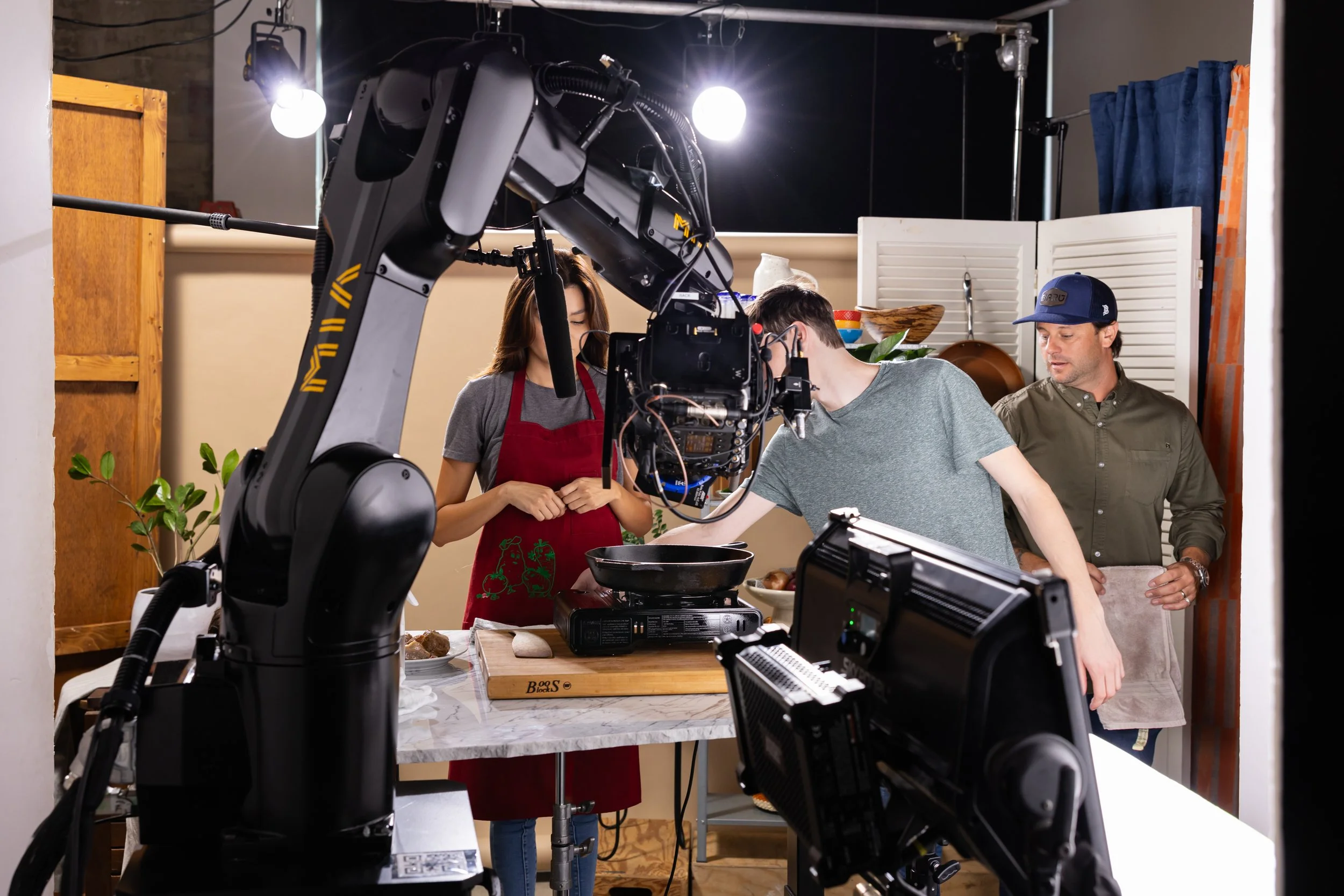
Director of Photography, DOP or DP? I'll Answer to All Three
First, I suppose I should get used to one small change.
DOP.
In Los Angeles, I've spent most of my career being called a DP, or Director of Photography. In London and across the UK, DOP is much more commonly used.
Fortunately, the job remains the same.
Whether you call someone a cinematographer, DP, DOP or Director of Photography, our responsibility is ultimately to translate an idea into images.
That involves the obvious things:
Lighting
Camera selection
Lenses
Composition
Camera movement
Exposure
Color
Visual continuity
But I've always thought the role goes considerably further than the technical side.
Then we have to figure out how to make all of those things coexist.
Preferably without everyone losing their minds before lunch.
That's as true for a DOP in London as it is for a DP in Los Angeles.
What I'm Bringing From Los Angeles to London
Los Angeles has been an incredible place to build a career in commercial cinematography because the variety of work is enormous.
I've been fortunate enough to shoot everything from tiny products on tabletop sets to celebrities, cars, food, drinks, dancers, TV promos and large-scale productions.
Sometimes there's a camera on a tripod.
Sometimes I'm flying a drone.
Sometimes we're shooting with Phantom cameras at ridiculous frame rates.
And sometimes there's a giant motion control robot flying a camera around the set while everyone quietly hopes the programming was correct.
That variety teaches you something important as a cinematographer:
There isn't one correct way to shoot something.
Every campaign has its own visual problem to solve.
A beauty product doesn't want to be photographed like a bottle of bourbon.
A plate of noodles doesn't move like a car.
A TV promo with talent requires a completely different energy from a tabletop commercial.
And a beverage splash happening in milliseconds requires a very different approach from a quiet portrait.
That's the experience I'm excited to bring into my work as a commercial cinematographer in London and the UK.
Commercial Cinematography Is Ultimately About Solving Problems
This is probably the biggest lesson I've learned over the years.
Being a commercial DOP is mostly creative problem-solving.
Yes, you need to know cameras.
Yes, you need to understand lighting.
And yes, I can happily spend an unreasonable amount of time talking about lenses.
But clients aren't really hiring a cinematographer because they want someone who knows what camera to use.
They're hiring us because they have an idea that needs to become real.
Sometimes that idea is straightforward.
Sometimes it's:
"We need the camera to fly through this splash, circle the bottle, transition through the label and somehow end up looking directly into the product."
Cool.
Now we figure it out.
That problem-solving mentality has become a huge part of how I approach commercial cinematography, whether I'm working with directors, advertising agencies, production companies or directly with brands.
It's something I'm particularly excited to bring to London commercial productions.
Food, Beverage and Product Cinematography in London
One area I'm especially looking forward to continuing in the UK is my work in food, beverage and product cinematography.
I've spent years shooting food.
Noodles. Pizza. Quesadillas. Chocolate. Sauces. Snacks. Ingredients flying through the air.
All the normal stuff.
Beverage cinematography introduces another set of challenges.
Wine needs elegance.
Liquor often wants drama.
Energy drinks want movement.
Cocktails need texture.
Soft drinks need freshness.
And everyone wants condensation.
So much condensation.
Then there's product cinematography, where I've worked across beauty, cosmetics, apparel, paint, toys, household products and other consumer brands.
Each category needs its own visual language.
London has a massive advertising, fashion, beauty, food and consumer brand ecosystem, so I'm particularly excited about collaborating with UK agencies and production companies working in these areas.
Bringing Motion Control Cinematography to UK Productions
Another major part of my work is motion control cinematography.
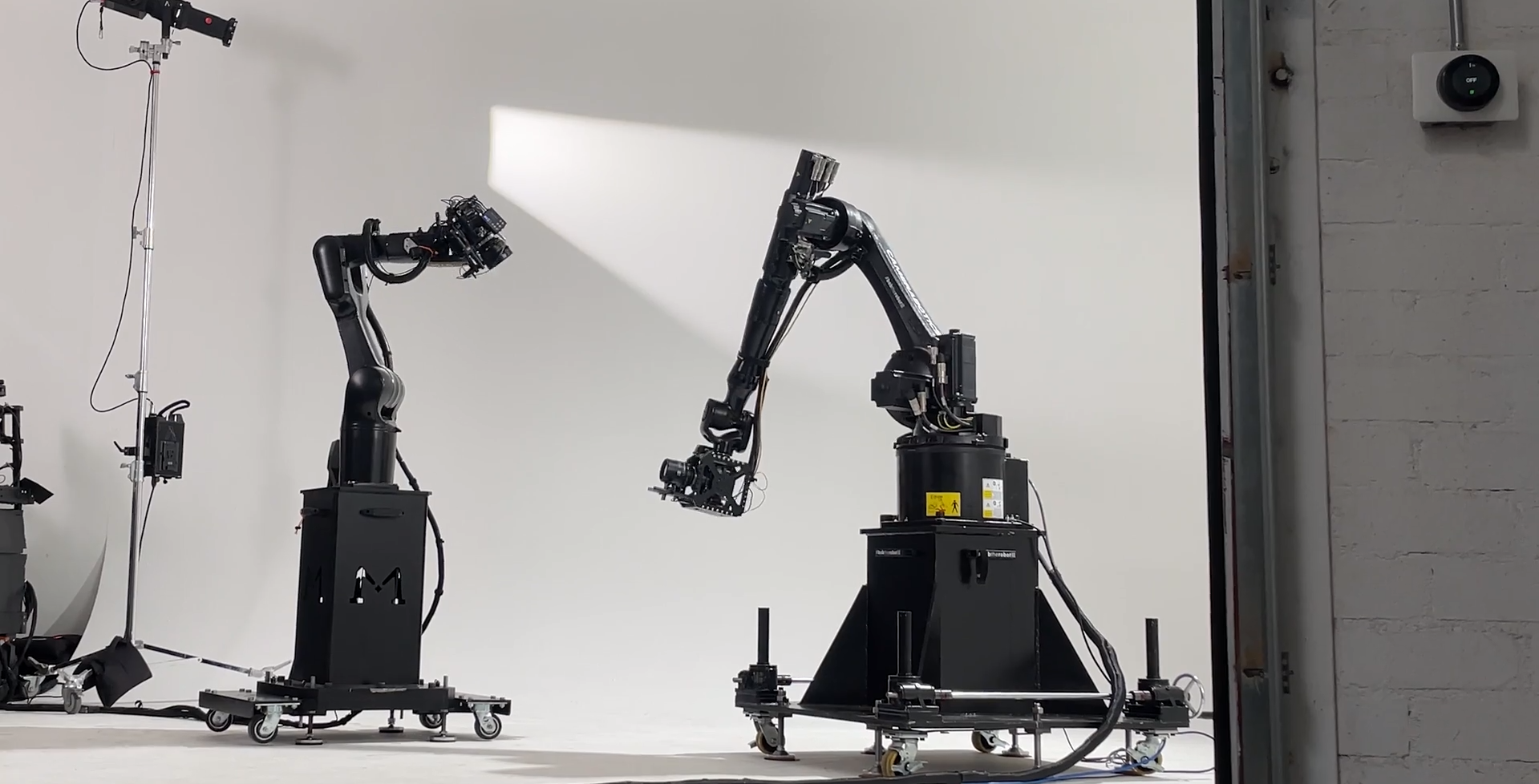
I've spent years working with robotic camera systems to create precise, repeatable and sometimes fairly ridiculous camera moves.
And I mean ridiculous in the best possible way.
Motion control can completely change what's possible in commercial cinematography.
It allows us to create:
Precisely repeatable camera moves
Multi-pass cinematography
Complex product reveals
High-speed camera moves
VFX-friendly repeatable passes
Synchronised movement between products and cameras
Extremely controlled tabletop cinematography
I've worked with single robot systems as well as dual-robot motion control setups, where multiple machines are synchronised to create movements that would be incredibly difficult to achieve conventionally.
But I've never been interested in using a robot simply because there's a robot available.
The technology has to make the shot better.
That's always the question.
What does this tool allow us to do creatively that we couldn't do otherwise?
That's the approach I'll continue bringing to motion control cinematography in London and across the UK.
Experience Matters More When Productions Move Faster
One thing that definitely isn't unique to Los Angeles is the way commercial production has changed.
We're all being asked to do more.
More deliverables.
More aspect ratios.
More social versions.
More content.
Usually with less time.
Sometimes with less money.
Occasionally with someone asking whether we can "just grab another 12 shots quickly."
Sure.
No problem.
In that environment, I think the experience of a DOP or Director of Photography becomes even more important.
You have to know when to push.
You have to know when to simplify.
You have to recognize which shot deserves another 20 minutes and which one absolutely does not.
You need lighting approaches that can evolve quickly.
And you need to understand what editorial, VFX and the client are going to need after everyone leaves the set.
That's where years of commercial production experience really start paying off.
London, Essex and Working Across the UK
While London cinematography will obviously become a major focus for me, being based around London also opens up opportunities throughout Essex and the wider UK.
Commercial production doesn't stop at the M25.
There are agencies, studios, brands, production companies and locations spread throughout England, and I'm looking forward to getting out there and meeting as many of them as possible.
My work has always taken me places.
Studios.
Deserts.
Mountains.
Beaches.
Race tracks.
Restaurants.
Warehouses.
Random fields.
And quite a few locations where someone confidently told me, "Don't worry, we've done this before."
So travelling for the right project isn't exactly new territory.
Whether it's a commercial production in central London, a studio shoot in Greater London, a project in Essex, or a production elsewhere in England or the UK, I'm looking forward to building a new network on this side of the Atlantic.
Different Market. Same Approach.
I'm under no illusion that Los Angeles and London are identical production markets.
They're not.
Different crews.
Different production structures.
Different terminology.
Different relationships.
Different working cultures.
And I'm looking forward to learning those differences.
But the fundamentals of good cinematography travel pretty well.
Be prepared.
Listen to the director.
Understand the creative.
Treat the crew well.
Don't create problems you don't need.
Solve the ones you do.
Know your craft.
Stay curious.
And make the best images you possibly can with whatever you've got.
That's been my approach as a Director of Photography in Los Angeles, and it'll remain my approach as I begin working as a DOP and cinematographer in London.
Looking Forward to the London Production Community
More than anything, I'm excited.
Starting this next chapter gives me the opportunity to meet an entirely new group of directors, producers, agencies, creatives, production companies, cinematographers and crew.
I'll be bringing plenty of Los Angeles experience with me, particularly across commercial cinematography, motion control, food cinematography, beverage cinematography, product cinematography, TV promos, drone work and advertising video production.
But I'm equally interested in seeing what I learn from working within the London and UK film and commercial production industry.
I've been doing this long enough to know that the industry never stops changing.
New cameras arrive.
New techniques emerge.
Robots get bigger.
AI is entering production workflows.
Budgets change.
Audiences change.
But making a great image with a great group of people?
That part still feels pretty familiar.
So, London.
Let's see what we can make.