Food Cinematography in Los Angeles: Why It’s One of the Hardest Commercial Categories to Get Right
People love to say they shoot food.
And to be fair, a lot of people do shoot food.
But there’s a big difference between pointing a camera at a plate… and creating food cinematography that actually makes people feel hungry, makes a brand look premium, and survives the brutal reality of commercial production.
That difference matters a lot in Los Angeles.
Because in Los Angeles commercial production, food work is everywhere:
restaurant campaigns
QSR spots
CPG launches
beverage pairings
social cutdowns
lifestyle food ads
tabletop product shoots
delivery app content
retail loops
branded content for hospitality and food brands
And despite how common it is, food cinematography in Los Angeles is still one of the hardest commercial categories to get right.
Why?
Because food is a liar.
It looks amazing in real life for about seven minutes.
Then it starts collapsing emotionally and structurally.
Steam disappears.
Greens wilt.
Sauces separate.
Frosting slumps.
Ice cream gives up on life.
Cheese becomes… philosophical.
And somehow, the camera sees all of it.
That’s why strong food cinematography is not just about making food look pretty.
It’s about:
timing
lighting
texture control
collaboration
pace
prep
restraint
and knowing exactly what makes food feel craveable on camera
That’s where experience really shows.
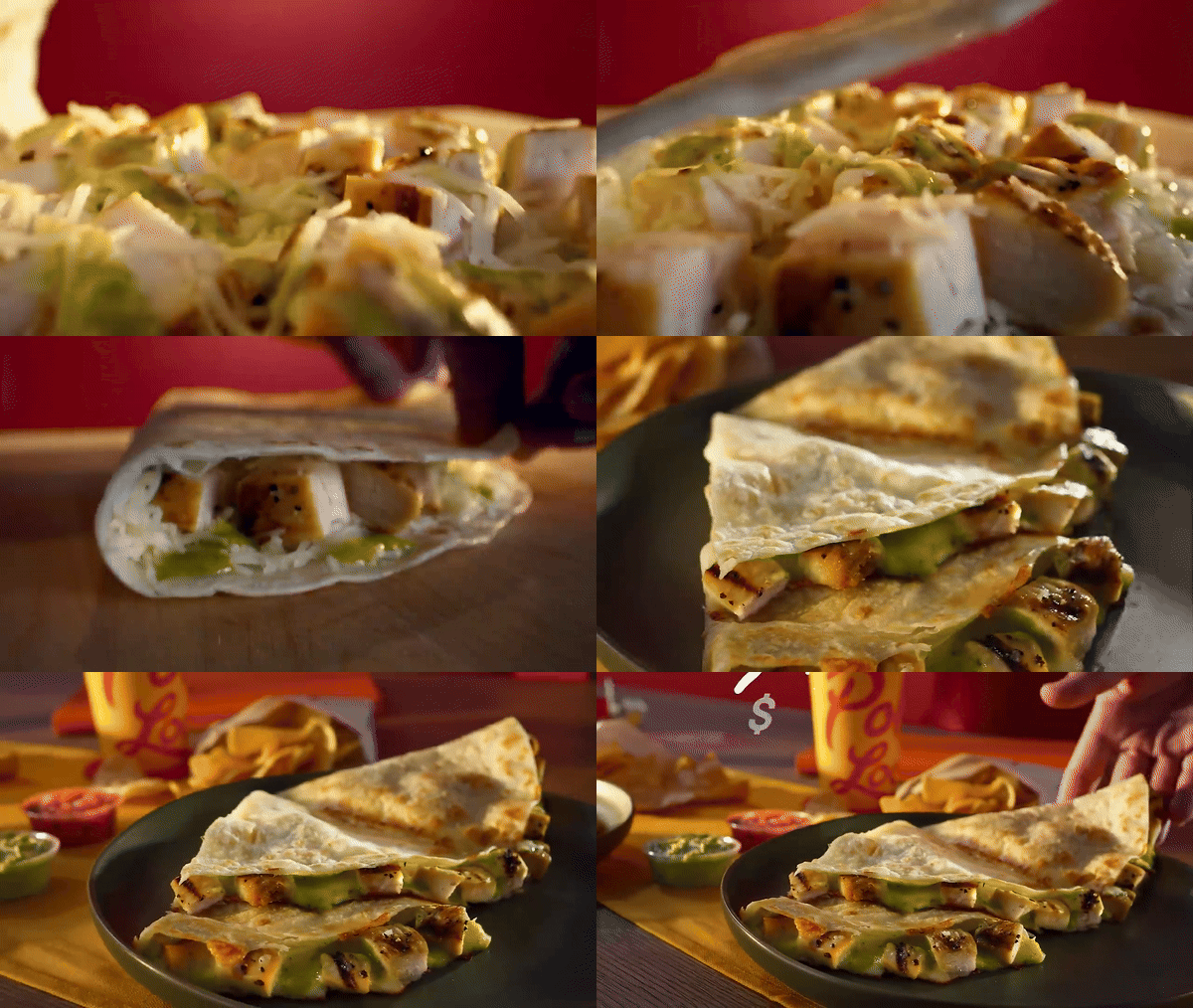
Food Cinematography Is Much More Technical Than It Looks
From the outside, food cinematography can look simple.
You see a beautiful burger.
A slow-motion pour.
A fork pull.
A macro close-up of texture.
A clean tabletop setup with perfect steam and some moody backlight.
Looks effortless.
It is not effortless.
Why?
Because food reacts fast, changes fast, and punishes small mistakes.
A few things that matter immediately:
moisture level
surface shine
edge definition
steam visibility
specular highlights
garnish freshness
sauce consistency
texture separation
lens distance
camera angle
color temperature
depth of field
timing between resets
One small lighting mistake can make food feel:
greasy instead of glossy
flat instead of fresh
dry instead of crisp
dead instead of appetizing
That’s why food cinematography in Los Angeles isn’t just a subcategory of commercial cinematography.
It’s its own skill set.
Appetite Appeal Is Not the Same as “Pretty”
This is one of the most important things about food cinematography.
A lot of people can make food look nice.
But in commercial food video production, “nice” isn’t enough.
Food needs to feel:
craveable
tactile
fresh
dimensional
warm (or cold, if that’s the point)
aromatic, even though you can’t smell video
emotionally satisfying
consistent with the brand
That last part is huge.
A premium restaurant campaign and a fast casual ad do not want the same visual language.
A luxury dessert spot might want:
deeper contrast
slower movement
richer textures
dramatic highlights
sensual macro detail
A QSR campaign might need:
brighter freshness
more direct appetite cues
cleaner, punchier pacing
clearer ingredient separation
stronger brand readability
A strong food cinematographer in Los Angeles understands that appetite appeal changes depending on:
audience
category
brand positioning
platform
and the actual purpose of the spot
That’s why this work is harder than it looks.
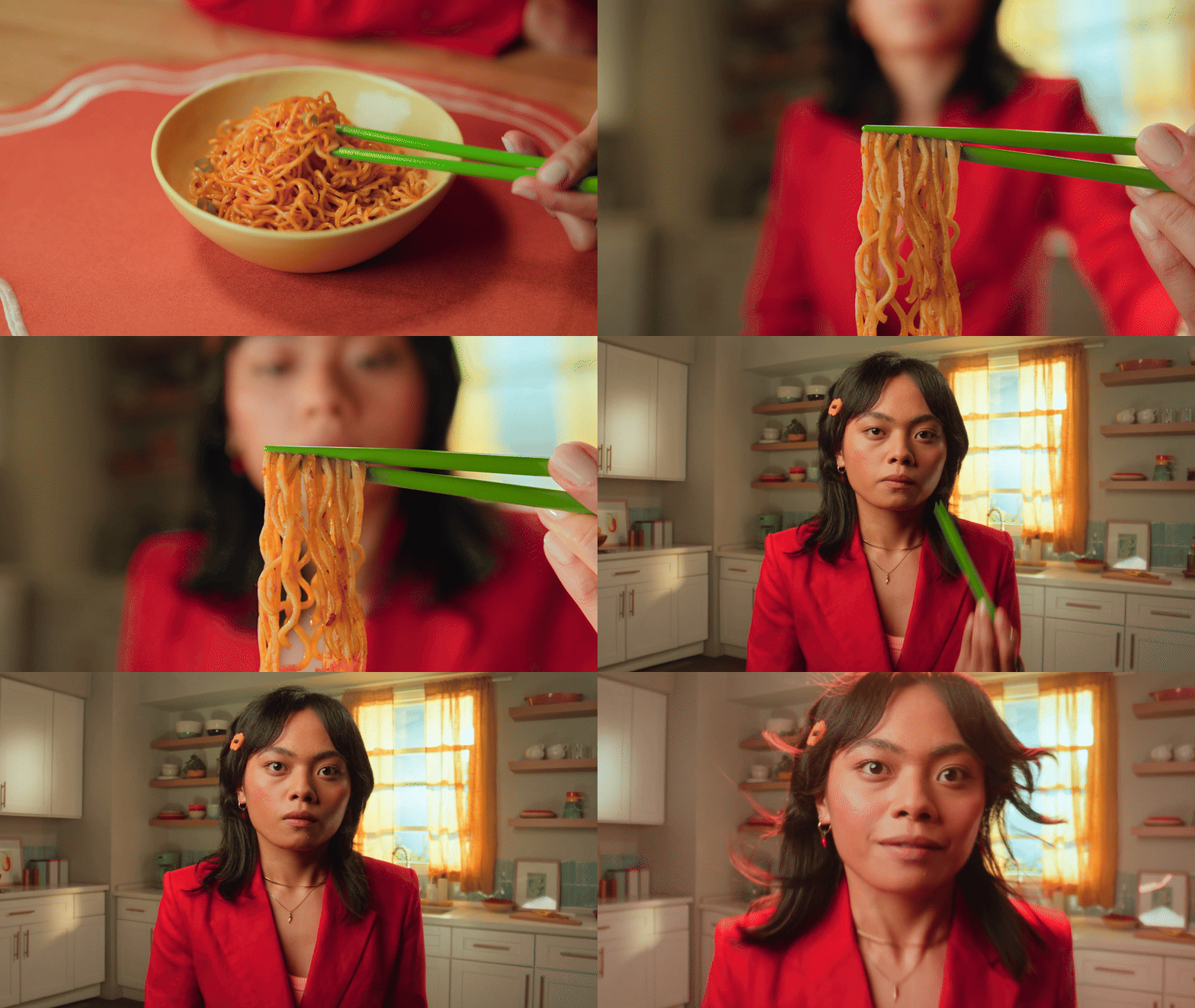
Timing Is Everything in Food Cinematography
If you want to know where experience really shows up in food cinematography, it’s timing.
Because food is rarely “camera ready” for long.
Sometimes it’s:
30 seconds
2 minutes
maybe 5 if the styling gods are feeling generous
That means the Director of Photography has to know:
when to light fully before hero food arrives
when to use stand-ins
when to rehearse camera movement without wasting the real product
when to prioritize the most fragile shot first
when to simplify a move because the food won’t survive another reset
when to let the food stylist lead
when to call for the hero plate
when to stop pretending one more take is a good idea
That last one is underrated.
Because once it starts dying, the camera becomes very honest.
And honesty is rude.
Lighting Food Is About Shape, Texture, and Restraint
Lighting is where a lot of food work either becomes incredible… or quietly disappointing.
The mistake a lot of less experienced shooters make is over-lighting food.
Too much fill.
Too much broad soft light.
Too much “let’s just make it bright.”
Suddenly the burger has no depth, the salad looks flat, and the pasta feels like it’s being interrogated.
Great food cinematography lighting is usually about:
controlled contrast
edge separation
selective shine
texture emphasis
shadow shape
highlight placement
color accuracy
depth and dimension
The goal is not to “light everything.”
The goal is to light what makes the food feel edible.
That could mean:
the gloss on a sauce
the crust on a sear
the softness of bread
the translucency of a drink garnish
the steam rolling off something hot
the flake of salt
the condensation on a cold glass
the lift in a fork pull
These are small things.
But in food cinematography, small things are the whole game.
Food Shoots Are a Team Sport
This is something a lot of people outside the category don’t fully appreciate.
Great food cinematography in Los Angeles is deeply collaborative.
A Director of Photography can’t just walk in and dominate the frame without working closely with:
food stylists
prop stylists
tabletop directors
producers
clients
agency creatives
sometimes special effects
sometimes motion control teams
sometimes high-speed teams
and sometimes whoever is holding the tweezers like their life depends on it
Food sets require rhythm.
The best commercial food DPs know how to:
prep with stand-ins
protect the hero product
communicate with styling
move fast when the food is ready
know which angle supports the styling best
adapt without wrecking the schedule
and avoid unnecessary resets that waste fragile hero elements
That kind of teamwork is a huge part of why Drew’s experience matters.
Because in Los Angeles food cinematography, the best-looking work usually comes from teams that trust each other and move with intention.
Motion Control and High-Speed Can Elevate Food Work — But Only If Used Well
This is where Drew has a real edge.
A lot of modern food cinematography now overlaps with:
robotic camera work
Phantom camera workflows
tabletop precision shooting
ingredient drops
pour shots
macro movement
particle and splash elements
multi-pass compositing
That can create amazing results.
But only if it serves the food.
A flashy robotic move doesn’t help if:
the appetite appeal gets lost
the food feels over-stylized
the shot becomes about the camera instead of the craving
the timing kills freshness
the audience notices the trick instead of the product
That’s where experience matters.
A strong food cinematographer in Los Angeles knows when:
motion control adds polish
high-speed adds impact
macro adds intimacy
and when the best move is just a beautifully timed, restrained push-in
Because sometimes the smartest shot is not the fanciest one.
Sometimes it’s just the one that makes the fries look dangerous.

Why Food Is Such a Strong Authority Category for Drew
This is exactly why food cinematography should be a major authority lane in Drew’s content and SEO strategy.
Because it’s one of those categories where:
everyone thinks they can do it
but the best results clearly come from specialists
Drew’s experience across:
food cinematography
tabletop commercial production
high-speed cinematography
motion control
commercial advertising
precision-driven lighting
…makes him especially well-positioned as a food DP in Los Angeles.
That matters to:
agencies
restaurant groups
CPG brands
hospitality brands
beverage clients
commercial directors
producers
and brand-side marketing teams looking for a Director of Photography who understands more than just “make it look good”
Because food doesn’t just need to look good.
It needs to sell.
And selling food on camera is harder than people think.
Final Thoughts
Food cinematography in Los Angeles is one of the most demanding categories in commercial cinematography.
It looks simple from the outside.
It absolutely is not.
It requires:
timing
restraint
lighting precision
texture awareness
appetite psychology
strong collaboration
fast decision-making
and the ability to make fragile, changing subjects feel irresistible on camera
That’s why the best food cinematographers in Los Angeles stand out.
Not because they shoot food.
Because they understand what food needs to become on camera:
craveable
premium
intentional
brand-specific
and impossible to scroll past
That’s the difference.
And that’s why in 2026, food remains one of the strongest specialty categories a commercial Director of Photography in Los Angeles can build authority around.