The Future of Commercial Cinematography: What Comes Next
Commercial cinematography has never been static—but the pace of change heading into 2026 and beyond is different. It’s not being driven by one new camera, one trend, or one platform. It’s being shaped by expectations.
Clients expect more clarity.
Audiences expect more intention.
And productions are expected to deliver more value from every shoot.
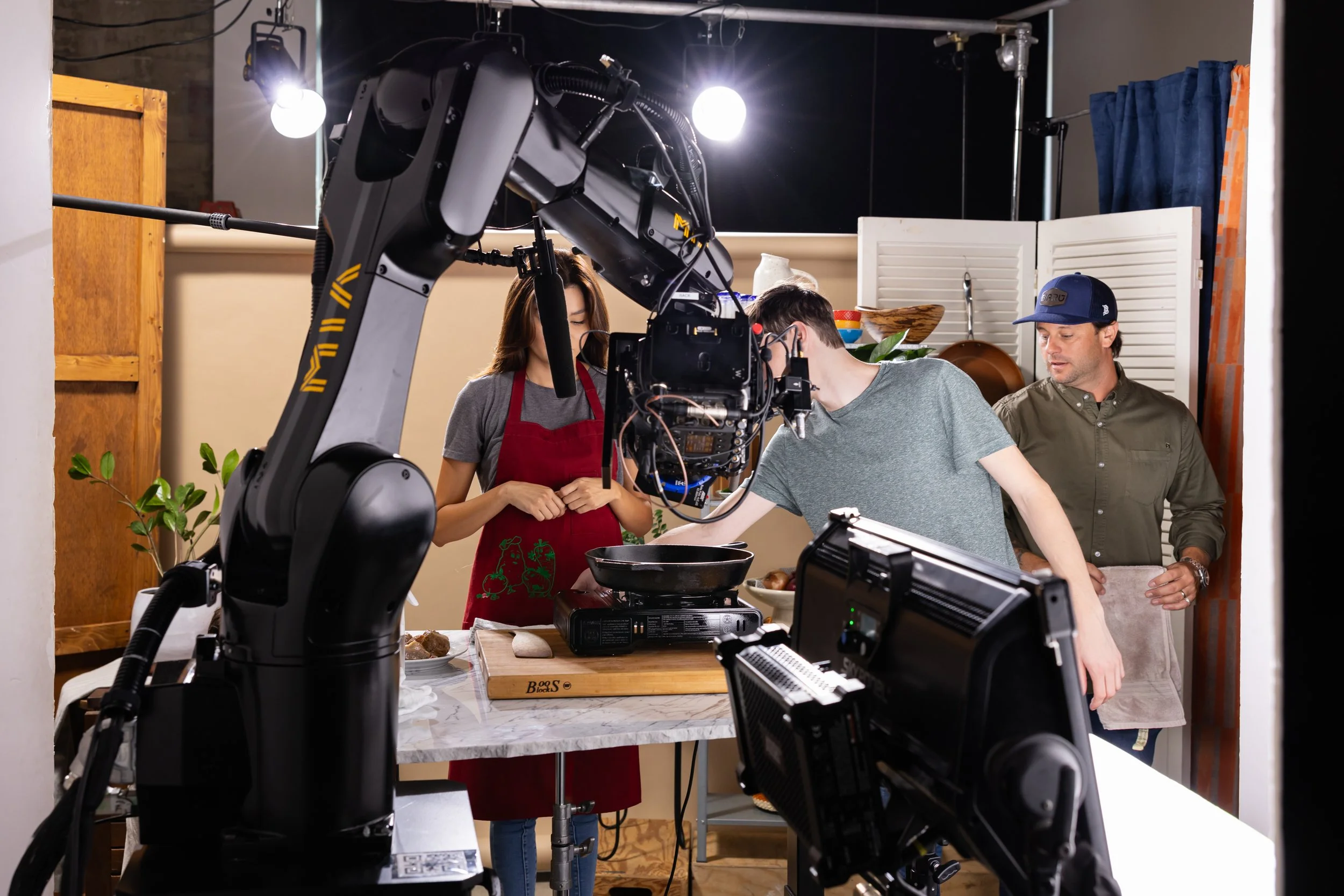
Cinematography Is Moving From Shots to Systems
One of the clearest shifts ahead is this: cinematography is no longer judged shot-by-shot.
It’s judged as a system.
Future-facing commercial cinematography prioritizes:
Repeatable visual language
Consistent camera logic
Scalable lighting strategies
Intentional movement rules
Instead of asking, “Does this shot look good?”
The better question is, “Does this system support everything the brand needs?”
Precision Will Continue to Replace Guesswork
As timelines tighten and budgets are scrutinized, tolerance for unpredictability keeps shrinking.
The future favors:
Designed camera movement
Post-aware cinematography
Fewer variables on set
Tools like motion control, virtual production, and advanced pre-production workflows aren’t about spectacle—they’re about confidence.
Confidence in execution is what allows creativity to scale.
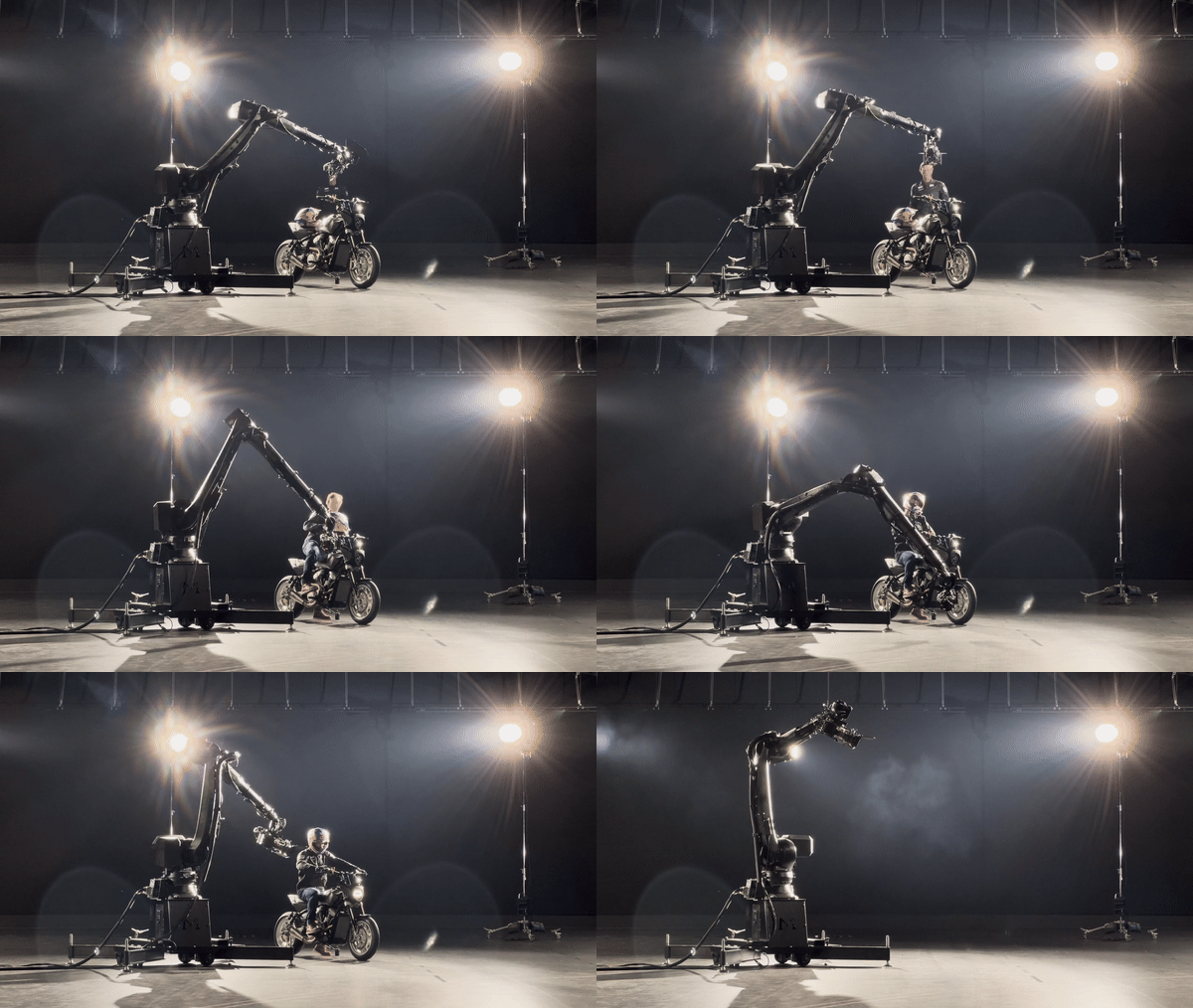
Technology Will Expand—Taste Will Matter More
There’s no shortage of new tools on the horizon:
More compact robotics
Smarter virtual production environments
Faster capture and turnaround
But technology alone won’t define the future.
Taste will.
The most in-demand cinematographers will be those who know:
When to use advanced tools
When to keep things simple
When restraint is more powerful than complexity
The future rewards judgment, not novelty.
Cinematography Will Be Judged by Performance
Commercial cinematography is increasingly evaluated by how it performs after delivery.
That includes:
How well it crops for social
How it holds up across platforms
How efficiently it feeds post-production
How consistently it supports brand identity
In the future, “beautiful” won’t be enough.
The work has to be useful.
The DP Will Continue to Become a Strategic Partner
Looking ahead, the Director of Photography’s role keeps expanding.
Future-ready DPs are:
Involved earlier in creative development
Fluent in marketing and distribution realities
Comfortable designing for post and scale
Trusted collaborators—not just technicians
Clients don’t just want images. They want clarity and direction.
That’s where the DP’s value continues to grow.
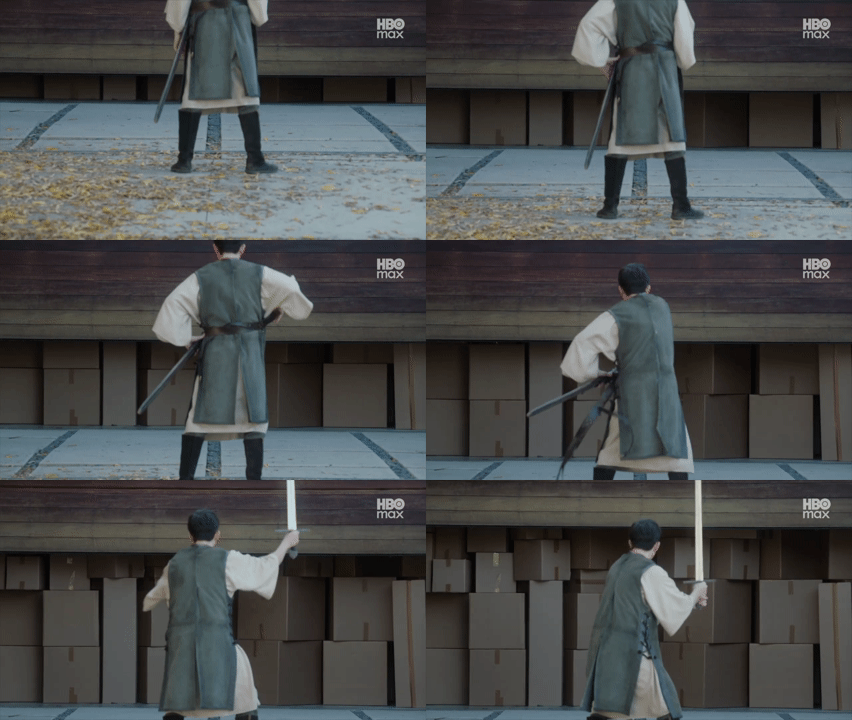
Visual Consistency Will Outperform Visual Noise
As audiences are flooded with content, consistency becomes a competitive advantage.
The future favors brands that:
Build recognizable visual language
Maintain tone across campaigns
Avoid chasing every trend
Collaboration Will Define the Best Work
The future of commercial cinematography is deeply collaborative.
Successful productions will depend on:
Early alignment between departments
Clear communication across teams
Shared understanding of goals
Less ego, more structure
DPs who can lead collaboratively—especially in complex environments—will continue to stand out.
Speed Will Matter, but Calm Will Matter More
Production isn’t slowing down.
But the future doesn’t belong to chaos—it belongs to calm efficiency.
The cinematographers who thrive will be those who:
Move quickly without rushing
Make decisions without panic
Protect creative intent under pressure
That calm becomes contagious on set—and invaluable to clients.
Geography Still Matters—But Expectations Are Global
While commercial hubs like Los Angeles remain influential, expectations are now global.
Brands everywhere expect:
High-end execution
Strategic thinking
Consistency across regions
The future DP isn’t just competitive locally—they’re competitive anywhere.
What Won’t Change
Despite all this evolution, some things remain constant.
Great commercial cinematography will always depend on:
Strong visual instincts
Clear storytelling
Respect for the audience
Intentional decision-making
Tools evolve. Expectations evolve.
But the core responsibility—to communicate clearly through images—does not.
Final Thoughts
The future of commercial cinematography isn’t about doing more. It’s about doing things on purpose.
Designing systems instead of chasing shots.
Building consistency instead of novelty.
Making decisions that scale instead of impress in isolation.
The cinematographers who succeed next aren’t the loudest or the flashiest.
They’re the ones who understand that in a crowded visual world, clarity is the real luxury.
And clarity, when done well, never goes out of style.