Product Cinematography Beyond Food & Beverage: Beauty, Automotive, and Everyday Objects at a Cinematic Level
Motion control may have earned its reputation in food and beverage work, but in 2026 its real impact is being felt far beyond liquids and pours. Beauty brands, automotive companies, and even everyday household products are using motion control to elevate how objects are perceived—and remembered.
Product cinematography today isn’t just about showing what something looks like. It’s about how it moves, how light reacts to it, and how intentional the camera feels. Motion control gives brands the ability to design that experience precisely.
This blog explores how motion control is shaping modern product cinematography across multiple industries, and why it’s become a go-to tool for premium commercial storytelling.
Why Product Cinematography Has Changed
Audiences are visually literate. They can instantly tell when something feels rushed, generic, or low-effort.
In 2026, product cinematography is expected to:
Feel intentional, not improvised
Scale across multiple formats
Match a brand’s visual language
Hold up over time, not just in one campaign
Motion control supports all of that by removing unpredictability from the equation.
Beauty & Cosmetics Cinematography: Precision Equals Luxury
Beauty and cosmetics are among the biggest adopters of motion control outside food and beverage—and for good reason.
Beauty products demand:
Perfect alignment between packaging and lighting
Controlled reflections on glossy surfaces
Repeatable hero moves across product lines
Seamless integration of stills and video
Motion control allows beauty cinematography to feel effortless, even when the execution is highly technical.
Where motion control shines in beauty:
Parallax moves around bottles and jars
Texture reveals of creams and serums
Drop-ins, caps, and applicator interactions
Identical hero shots across seasonal launches
Luxury in beauty is communicated through restraint—and precision.

Cosmetics Cinematography and Visual Consistency
Cosmetics brands rarely shoot one product at a time.
They’re often capturing:
Entire collections
Shade variations
Limited editions
Regional packaging updates
Motion control allows a single camera move to be reused across an entire lineup, ensuring:
Visual continuity
Faster production cycles
Stronger brand recognition
For agencies, this consistency is invaluable.
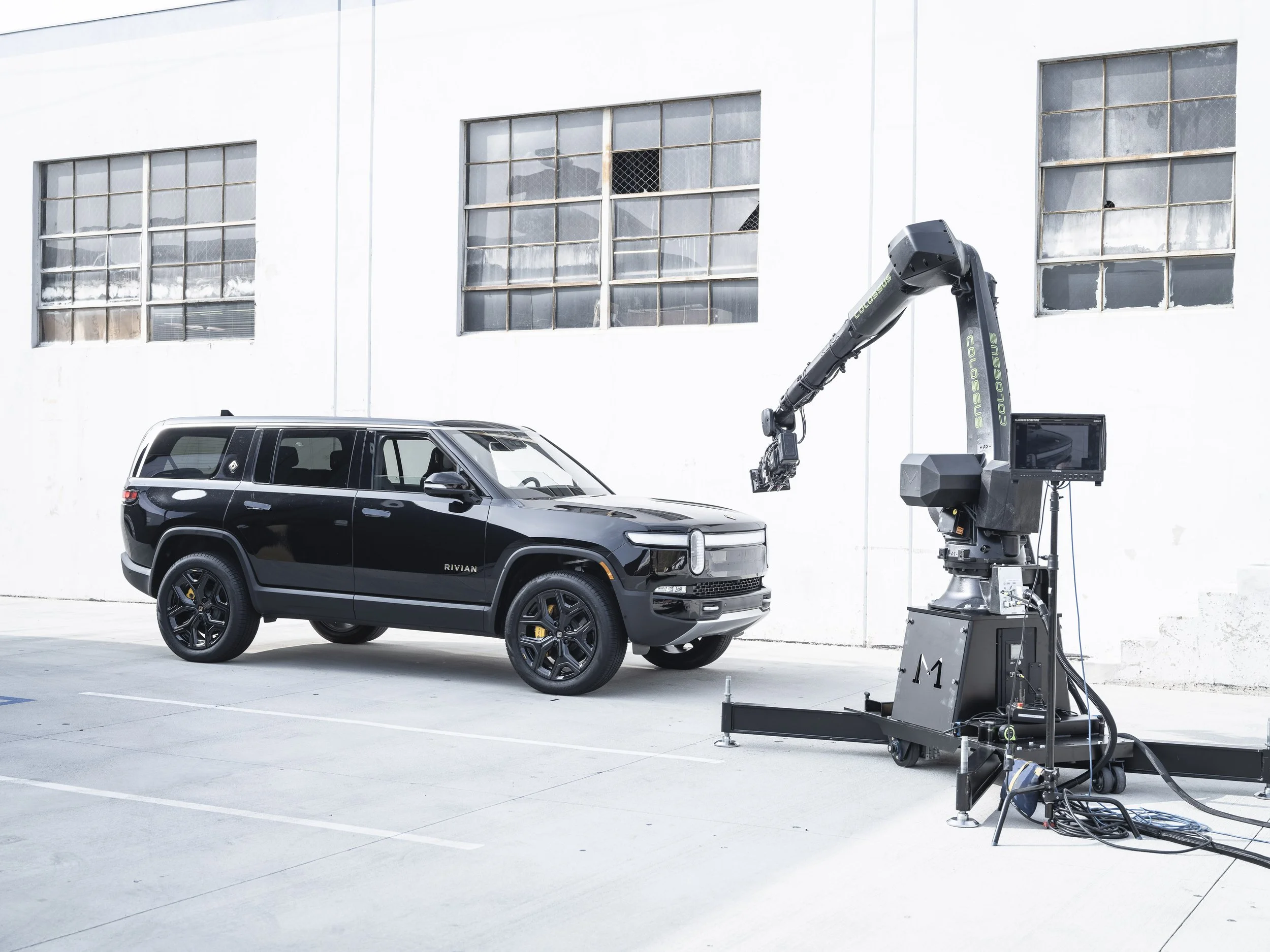
Automotive Product Cinematography: Control at a Larger Scale
Automotive cinematography might seem far removed from tabletop work—but the principles are the same.
Whether it’s:
Interior details
Exterior badges
Materials and textures
Feature highlights
Motion control allows automotive product cinematography to:
Maintain exact framing across takes
Execute complex moves safely
Align perfectly with CGI or VFX
Create cinematic motion at close range
Even subtle robotic moves add a sense of engineering precision that aligns perfectly with automotive branding.

Household Products: Making the Ordinary Feel Intentional
Household products face a unique challenge: they’re functional, familiar, and often overlooked.
Motion control helps elevate these products by:
Creating smooth, confident camera movement
Highlighting form, texture, and usability
Making small details feel deliberate
Avoiding “catalog-style” visuals
A well-designed camera move can turn a simple object into a hero—without overselling it.
Tabletop Product Cinematography Is the Common Thread
Across beauty, automotive, and household categories, tabletop cinematography is the unifying discipline.
At close distances:
Movement must be flawless
Speed changes perception instantly
Lighting interacts aggressively with surfaces
Motion control allows tabletop product cinematography to:
Remain consistent across formats
Support compositing and post-production
Deliver repeatable hero shots
Maintain visual polish under scrutiny
This is where premium product work separates itself from the rest.
Motion Control and Brand Visual Systems
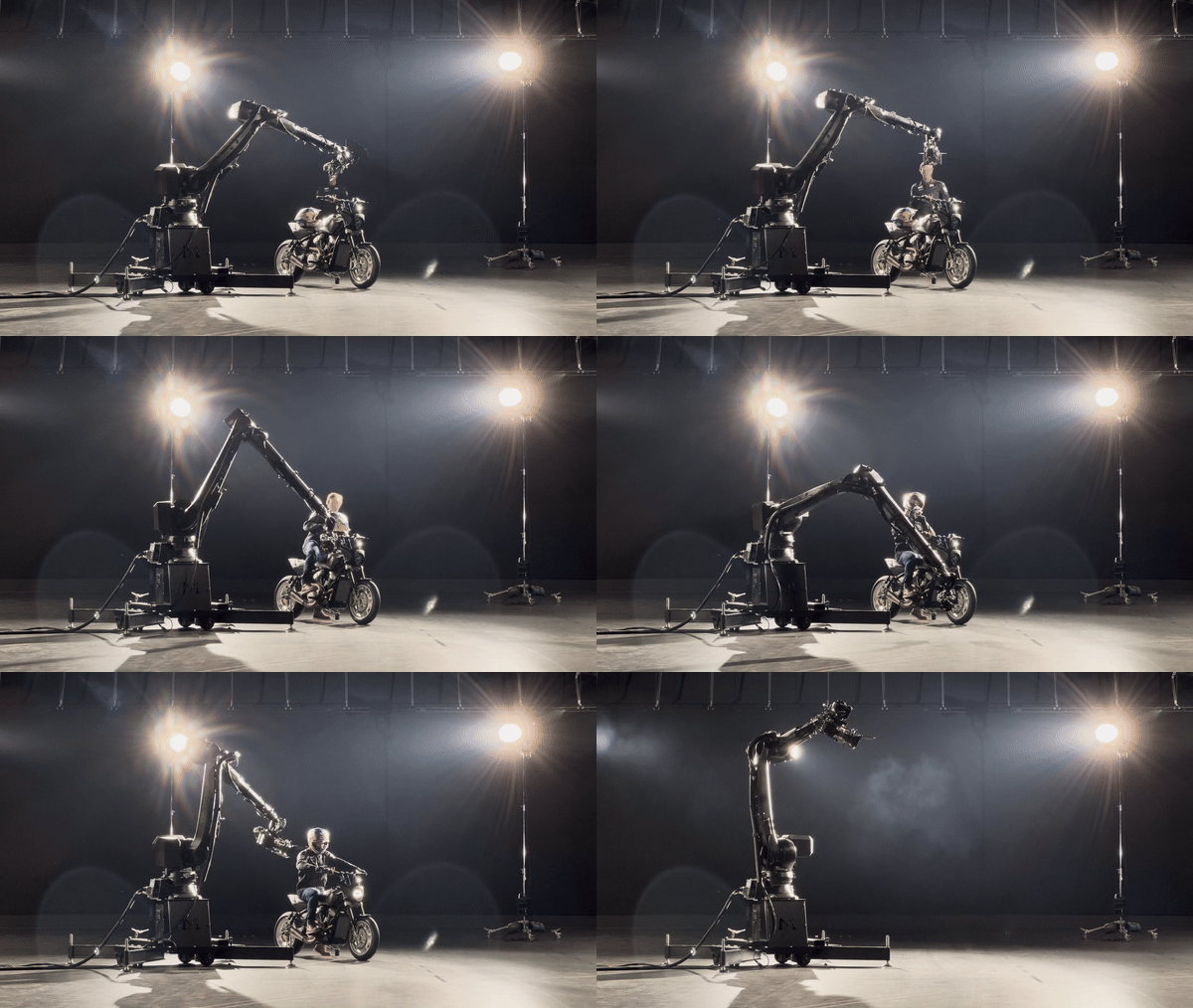
One of the most overlooked advantages of motion control is its role in brand systems.
Instead of designing one-off shots, brands can design:
Reusable camera moves
Signature reveals
Recognizable pacing
Over time, these elements become part of the brand’s visual identity—just like typography or color palettes.
Multi-Platform Product Content in 2026
Product cinematography rarely lives in one place anymore.
A single shoot may feed:
Website hero videos
Vertical social ads
Paid placements
Product detail pages
Digital displays
Motion control allows a single setup to support all of these without visual compromise.
Because the movement is repeatable:
Crops stay clean
Reframes remain intentional
New edits don’t require reshoots
This is where motion control delivers long-term value.
Why Agencies Expect This Level of Control
In competitive production environments like Los Angeles, agencies expect product cinematography to be both creative and reliable.
Motion control provides:
Predictable execution
Fewer surprises on set
Cleaner post-production workflows
Confidence during client reviews
That confidence allows agencies to push creative further.
Motion Control Isn’t About Flash—It’s About Trust
The best motion-controlled product cinematography doesn’t call attention to itself.
It feels:
Calm
Confident
Intentional
Premium
Audiences may not know why it feels better—but they feel the difference.
Final Thoughts
Across beauty, cosmetics, automotive, and household categories, motion control allows brands to:
Build consistency
Elevate perception
Scale content intelligently
Protect creative intent
Motion control doesn’t replace storytelling—it gives it structure.
And when structure meets creativity, product cinematography becomes cinematic.