

When Motion Control Is Worth It—and When It’s Not
Motion control cinematography is one of the most powerful tools in modern commercial production—but only when used intentionally.
The goal isn’t to use motion control everywhere. The goal is to use it where it makes the work better.
Motion control cinematography is powerful. But it’s not a universal solution—and knowing when not to use it is just as important as knowing when it elevates a project.
In 2026, motion control is often requested early in commercial treatments. Sometimes it’s the right call. Other times, it adds complexity without real creative or strategic benefit.
This post is about making the right decision, not defaulting to technology for its own sake. As a director of photography, my job isn’t to use motion control on every shoot—it’s to choose the approach that best serves the story, the product, and the distribution strategy.
When Motion Control Is Absolutely Worth It
There are clear scenarios where motion control isn’t just helpful—it’s transformative.
1. Repeatability Is Required
If a shot needs to be recreated exactly across:
Multiple days
Different products
Multiple formats
Still + video capture
Motion control is the right tool. There’s no substitute for true repeatability.
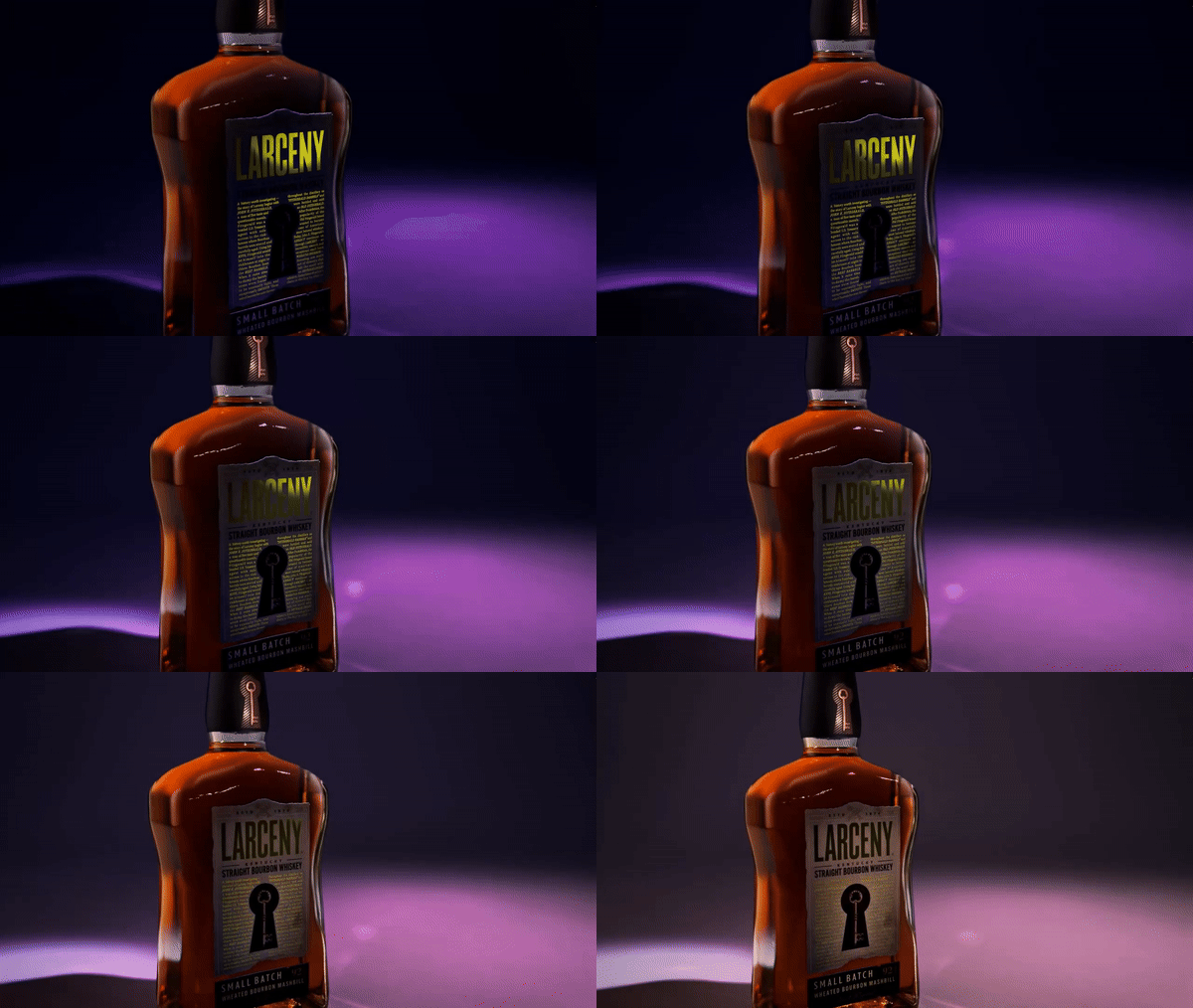
2. Tabletop & Product Cinematography
Small-scale work magnifies inconsistency.
Motion control excels when:
Products are shot close-up
Parallax matters
Micro-adjustments are critical
Compositing is planned
In tabletop production, precision isn’t optional—it’s the foundation.
3. Food & Beverage With Liquid Interaction
Liquids don’t forgive mistakes.
Motion control becomes essential when:
Pour timing must match camera movement
Multiple liquid passes are required
High-speed is involved
Consistency matters across edits
Without motion control, these shots rely on luck. With it, they’re engineered.
4. VFX, Compositing, and Post-Heavy Workflows
If post-production is doing heavy lifting, motion control simplifies everything.
It supports:
Clean plates
Pass alignment
Seamless composites
Efficient retiming
Shots designed for post perform better in post.
5. Multi-Deliverable Commercial Campaigns
Modern campaigns demand volume.
Motion control is worth it when:
Content must scale across platforms
Crops and reframes are expected
Long-term asset reuse matters
This is where ROI compounds quickly.
When Motion Control Might Be the Wrong Choice
Just because motion control can be used doesn’t mean it should.
1. Performance-Driven or Human-Centered Stories
Some moments thrive on imperfection.
Handheld or organic movement often works better for:
Lifestyle storytelling
Documentary-style brand films
Emotional, human-led narratives
Motion control can feel sterile if the goal is intimacy.
2. Tight Budgets With Minimal Post Needs
Motion control adds:
Setup time
Pre-planning
Technical overhead
If a project:
Needs only a few simple shots
Has no compositing
Won’t scale across formats
The return may not justify the investment.
3. Fast-Turn Social Content
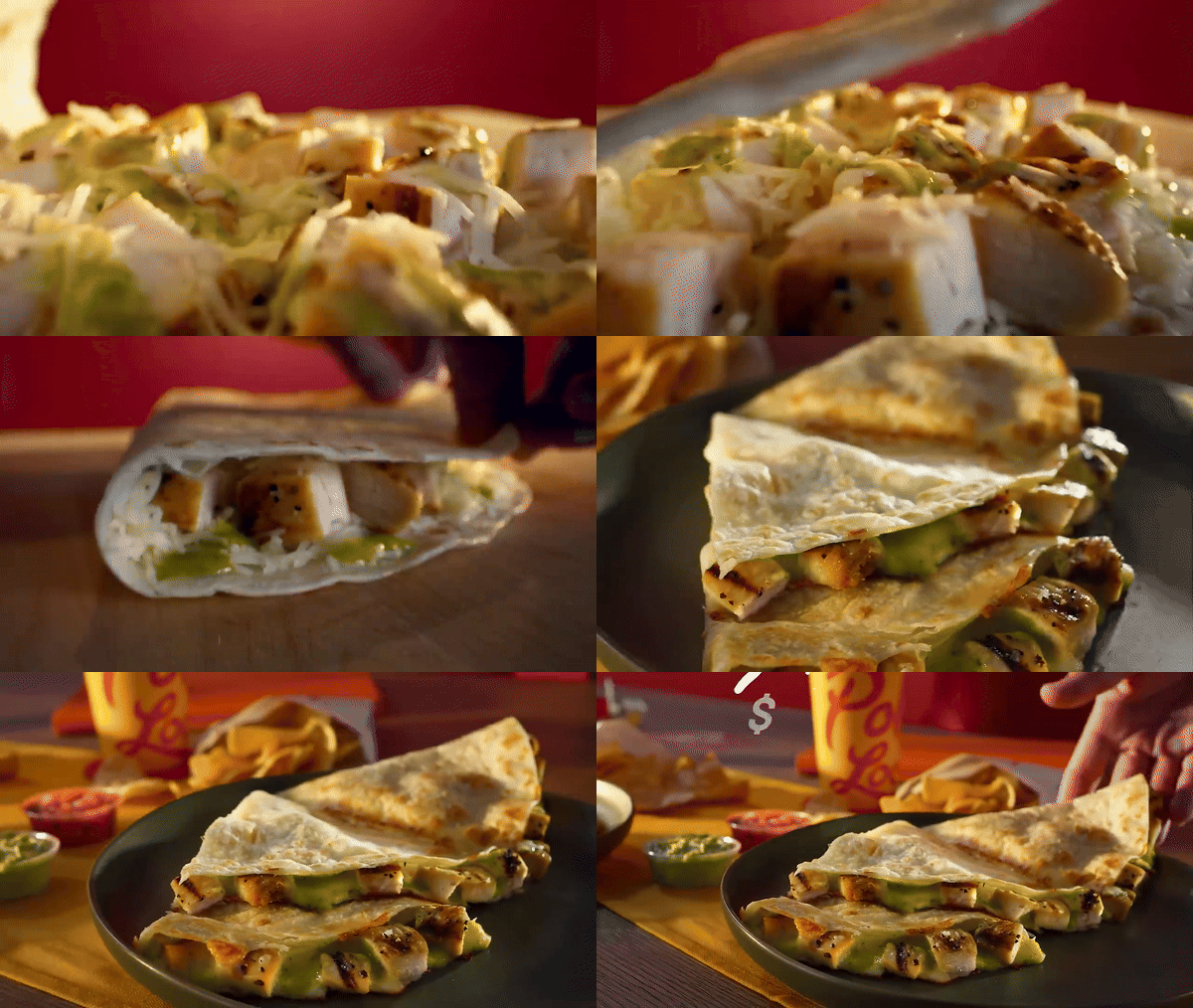
Not all content needs cinematic longevity.
For:
Rapid social trends
Short-lived campaigns
Lo-fi brand moments
Speed often matters more than precision.
4. When Creative Is Still Unclear
Motion control rewards preparation.
If:
The concept is fluid
The client is undecided
The visual direction is evolving
It may be better to explore creatively first, then lock precision later.
Motion Control vs Traditional Camera Movement: A Strategic Comparison
Use Case | Best Tool
Tabletop product cinematography - Motion control
Food & beverage pours - Motion control
High-speed splash moments - Motion control
Lifestyle storytelling - Handheld / dolly
Documentary-style content - Handheld
Fast social content - Traditional movement
The best productions often mix both.
The Hybrid Approach: Where Most Projects Land
In 2026, many commercial shoots use a hybrid strategy:
Motion control for hero shots
Traditional movement for lifestyle or supporting visuals
This allows:
Precision where it matters
Energy where it counts
Efficiency across the full deliverable list
Hybrid workflows often produce the strongest results.
Why Agencies Appreciate This Decision-Making
Agencies don’t want technology—they want confidence.
When a DP can clearly explain:
Why motion control adds value
Where it improves efficiency
When it’s unnecessary
It builds trust.
In competitive markets like Los Angeles, that clarity separates technicians from strategic collaborators.
Motion Control Is a Tool, Not an Identity
The biggest misconception is that motion control defines a cinematographer’s style.
It doesn’t.
Style comes from:
Shot design
Lighting choices
Timing
Storytelling intent
Motion control simply executes those decisions with precision—when precision is needed.
Final Thoughts
Motion control cinematography is one of the most powerful tools in modern commercial production—but only when used intentionally.
It’s worth it when:
Precision protects creativity
Scale demands consistency
Post-production needs alignment
It’s not worth it when:
Emotion outweighs control
Speed matters more than polish
The story thrives on imperfection
The goal isn’t to use motion control everywhere.
The goal is to use it where it makes the work better.