Motion Control in Food & Beverage Cinematography: Turning Chaos Into Choreography
Food and beverage cinematography is one of the most demanding corners of commercial production. Liquids spill unpredictably. Condensation forms and disappears. Ice melts. Foam collapses. Timing is unforgiving—and once a moment passes, it’s gone.
That’s exactly why motion control has become non-negotiable in high-end food and beverage work.
In 2026, brands aren’t just selling taste. They’re selling feeling, refreshment, luxury, and precision. Motion control allows those qualities to be designed deliberately, rather than hoped for on set.
This post dives into why food and beverage cinematography benefits more from motion control than almost any other category, how it’s used in real commercial workflows, and why agencies increasingly expect it as standard.
Why Food & Beverage Cinematography Is Inherently Unstable
Unlike solid products, food and beverages are constantly changing.
Every shoot battles:
Gravity
Temperature
Evaporation
Surface tension
Human timing limitations
A liquid pour will never behave the same way twice. Even subtle changes in speed or camera angle alter how the product reads on screen.
Motion control removes that variable.
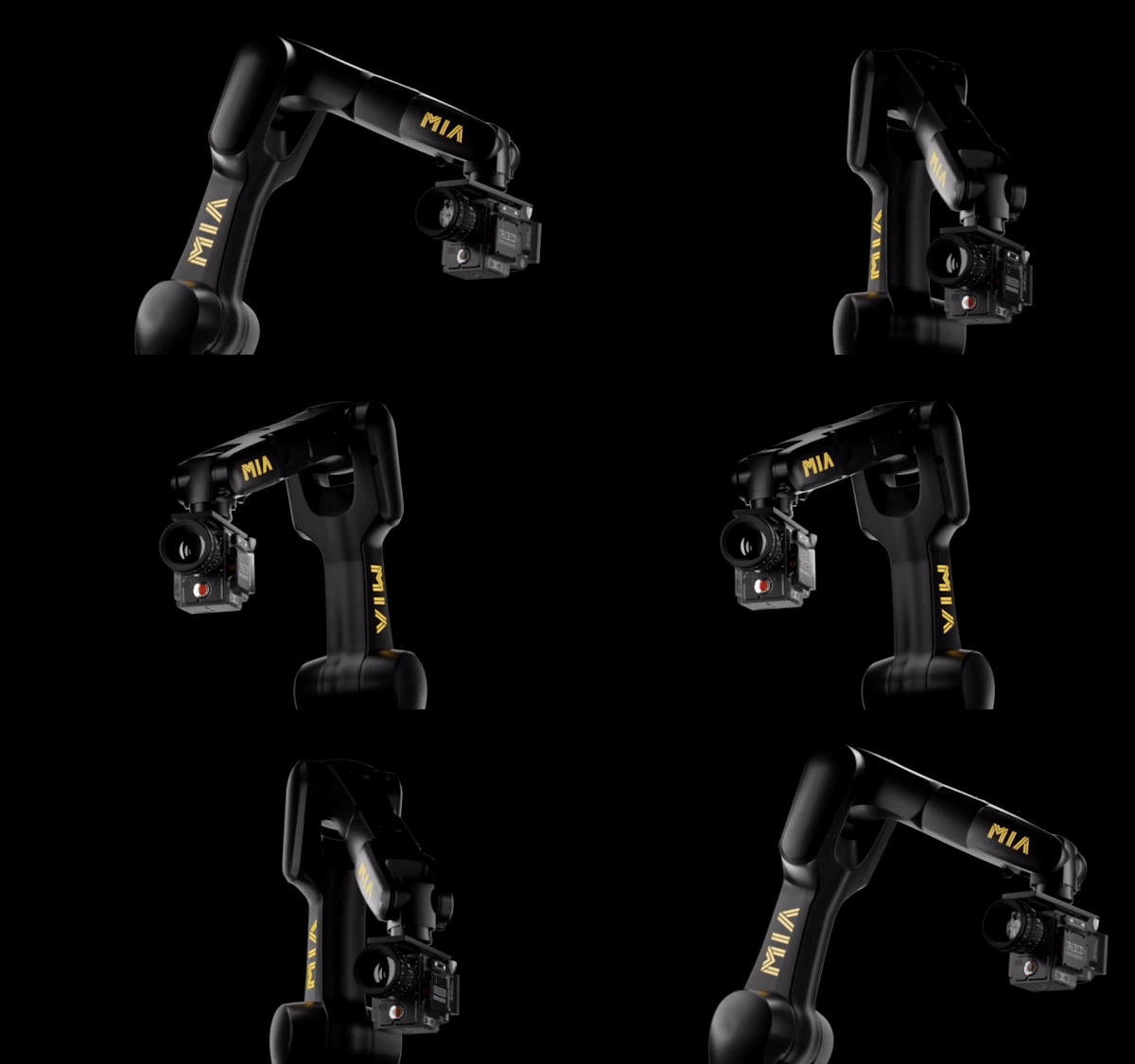
Motion Control Turns Fleeting Moments Into Repeatable Assets
At its core, motion control allows food and beverage moments to be recreated with surgical accuracy.
This is critical for:
Beverage pours
Carbonation bursts
Ice drops
Cream or milk interactions
Garnish placements
Condensation reveals
Once a camera move is programmed, it can be replayed exactly—whether that’s minutes or days later.
That repeatability transforms food and beverage cinematography from reactive to engineered.

Beverage Cinematography: Designing the Perfect Pour
Beverage cinematography is one of the clearest examples of motion control’s power.
A single pour might require:
Multiple liquid densities
Different lighting passes
Clean plates for compositing
Slow-motion and real-time versions
With motion control:
The camera move stays identical
The pour timing can be refined
Different liquids can be swapped
Mistakes don’t mean starting over creatively
For beverage director of photography work, this precision allows you to chase perfection, not just coverage.

High-Speed + Motion Control: Where the Magic Happens
When motion control is paired with high-speed cinematography, food and beverage visuals shift into another tier entirely.
This combination allows:
Ultra-detailed splash moments
Floating liquid forms
Suspended ice and garnish movement
Cinematic slow motion with camera travel
Without motion control, syncing camera movement to high-speed action becomes guesswork.
With it, every element—camera, liquid, timing—is choreographed.
The result doesn’t feel technical.
It feels luxurious.
Tabletop Food Cinematography Demands Micro-Precision
Tabletop cinematography exaggerates everything.
At close distances:
A millimeter is a major framing shift
Minor vibration ruins a shot
Speed changes alter perceived texture
Motion control excels here because it allows:
Micro-adjustments to camera position
Perfect parallax around food items
Seamless transitions between hero angles
Consistency between stills and motion
This is why tabletop food cinematography and motion control are now inseparable in premium commercial production.
Lighting, Reflections, and Why Motion Control Matters
Food and beverage lighting is often more complex than the movement itself.
Reflections, highlights, and specular detail must:
Stay consistent across takes
Align perfectly for compositing
Match brand visual language
Motion control ensures the camera never becomes a lighting variable.
When movement is locked:
Lighting tweaks are intentional
Reflections stay predictable
Post-production becomes cleaner
This saves time in both shooting and finishing.
Motion Control and Multi-Deliverable Campaigns
A single food or beverage shoot rarely produces a single output anymore.
Brands now expect:
Broadcast commercials
Vertical social content
Website loops
Digital billboards
Paid ad variations
Motion control enables one core setup to serve all of these formats.
Because the move is repeatable:
Crops remain usable
Reframes stay aligned
New edits don’t require reshoots
This is one of the biggest reasons agencies are pushing for motion control in food and beverage production.
Why Agencies Expect Motion Control in 2026
In competitive markets like Los Angeles, food and beverage campaigns operate under intense scrutiny.
Agencies expect:
Predictable execution
High-end polish
Flexibility in post
Reduced risk on set
Motion control delivers all four.
It allows agencies to promise bold creative ideas—without gambling on execution.
Motion Control vs “Getting It in One Take”
There’s a romantic idea in filmmaking about capturing the perfect take organically.
Food and beverage work doesn’t reward romance. It rewards control.
Motion control doesn’t remove artistry—it protects it by allowing:
Iteration without loss
Refinement without drift
Creativity without chaos
You’re no longer chasing the moment.
You’re building it.
The Long-Term Value for Food & Beverage Brands
From a brand perspective, motion control isn’t about one shoot—it’s about longevity.
It allows brands to:
Reuse visual language across campaigns
Maintain consistency across product lines
Scale content without visual degradation
Build recognisable cinematic identity
That consistency compounds over time.
Final Thoughts
Food and beverage cinematography sits at the intersection of unpredictability and expectation. Audiences want realism—but brands demand perfection.
Motion control bridges that gap.
It transforms liquids into performers.
It turns timing into choreography.
And it allows food and beverage visuals to feel intentional, elevated, and cinematic—every single time.
In 2026, motion control isn’t a luxury for food and beverage cinematography.
It’s the standard.